


FIFA is expected to visit Nigeria before formally approving the proposed Normalisation Committee that could take charge of the country’s football administration amid the deepening crisis at the Nigeria Football Federation.
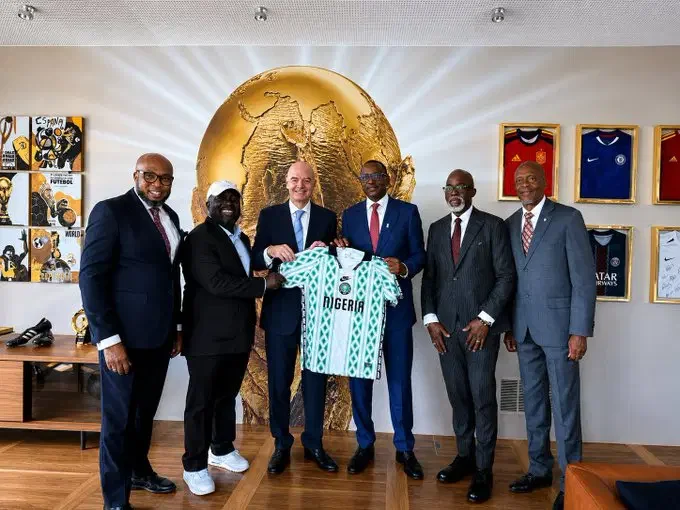
The development follows a meeting between a Nigerian delegation led by National Sports Commission Chairman Shehu Dikko and FIFA President Gianni Infantino at FIFA headquarters in Zurich.
FIFA welcomed Nigeria’s proposed reform process but stopped short of giving immediate approval to the Normalisation Committee, with a visit to Nigeria expected to come before the next step is taken.
The planned FIFA visit is expected to give the world football governing body a clearer understanding of the situation surrounding the NFF and the proposed reforms.
Nigeria’s football administration has entered a period of major uncertainty following the mass resignation of the Ibrahim Gusau-led NFF board.
The crisis has prompted calls for a restructuring of football governance, with the National Sports Commission proposing a Normalisation Committee as an interim solution.
However, FIFA’s involvement means the proposed structure cannot simply be implemented without consideration of the international body’s requirements.
The National Sports Commission has proposed establishing a Normalisation Committee to oversee Nigerian football during the reform period.
FIFA has welcomed the proposal but has not yet formally ratified it.
The proposed committee could remain in place for between three months and one year, depending on the reform process and the eventual roadmap for Nigerian football.
Its responsibilities would be expected to include helping stabilise the administration of the NFF, reviewing the federation’s structures and creating a pathway towards a more credible and sustainable football governance system.
One of the significant aspects of the proposed arrangement is FIFA’s involvement in the selection of committee members.
According to the report, FIFA is expected to play a major role in determining the eligibility and integrity of individuals considered for positions on the committee.
This is intended to ensure that the eventual members meet the necessary standards and can operate independently during the reform process.
The involvement of FIFA could therefore prevent the Normalisation Committee from becoming another platform for the same internal interests that have contributed to the current crisis.
AbdulHakeem Uthman Mustapha, a Senior Advocate of Nigeria and member of FIFA’s Anti-Racism Committee, has emerged as the leading candidate to head the proposed Normalisation Committee.
His previous experience with FIFA could make him an attractive option as Nigeria attempts to navigate the complicated process of restructuring its football administration.
However, his reported emergence as the leading candidate does not mean his appointment has been finalised.
FIFA’s visit and subsequent discussions are expected to influence the final structure and composition of the committee.

The current crisis follows a difficult period for Nigerian football.
The Super Falcons failed to qualify directly for the 2027 FIFA Women’s World Cup after losing to South Africa in the WAFCON third-place play-off.
The setback was followed by growing criticism of the administration of Nigerian football and eventually contributed to the wider push for reforms.
The NFF subsequently established a fact-finding committee to investigate Nigeria’s football setbacks.
That committee, chaired by former NFF General Secretary Fanny Amun, was given two weeks to investigate the problems affecting the country’s national teams and make recommendations.
The current Normalisation Committee proposal represents a much broader attempt to address the governance problems surrounding Nigerian football.
The objective is not simply to replace a few officials, the proposed reforms are expected to address the structures governing Nigerian football, including the NFF statutes, elections and the way football administration operates.
Reports indicate that FIFA’s involvement is intended to help create a roadmap capable of producing a more sustainable football administration rather than another short-term leadership arrangement.
That makes the coming weeks particularly important, if properly handled, the process could provide an opportunity to rebuild confidence in Nigerian football administration.
Nigeria cannot afford another prolonged dispute with FIFA, the world governing body has previously taken action against Nigeria over concerns surrounding government interference in football administration.
That history makes the current process particularly sensitive, any restructuring must therefore balance Nigeria’s desire to reform its football system with FIFA’s rules concerning the independence of national football associations.
The proposed Normalisation Committee will need to operate within that framework.
The NFF crisis has now moved beyond an internal dispute, with FIFA directly involved in discussions over the future of Nigerian football administration, the next phase could determine how the federation operates for years to come.
The proposed Normalisation Committee could provide the bridge between the current crisis and a new administrative structure.
But its success will depend on the credibility of the people selected, the independence of the process and the willingness of stakeholders to implement meaningful reforms.
FIFA’s planned visit to Nigeria is now one of the most important developments in the country’s football crisis.
The visit is expected to help determine the timeline, structure and composition of the proposed Normalisation Committee.
Until FIFA completes that process, formal approval remains outstanding.
Nigeria’s football community will therefore be watching closely, the country needs an administration capable of restoring stability, improving transparency and creating an environment where national teams and domestic football can thrive.
The Normalisation Committee could be the first step towards achieving that, but before it can begin its work, FIFA wants to see the situation on the ground, the next chapter of Nigerian football’s administrative crisis may therefore be decided after FIFA’s visit.