
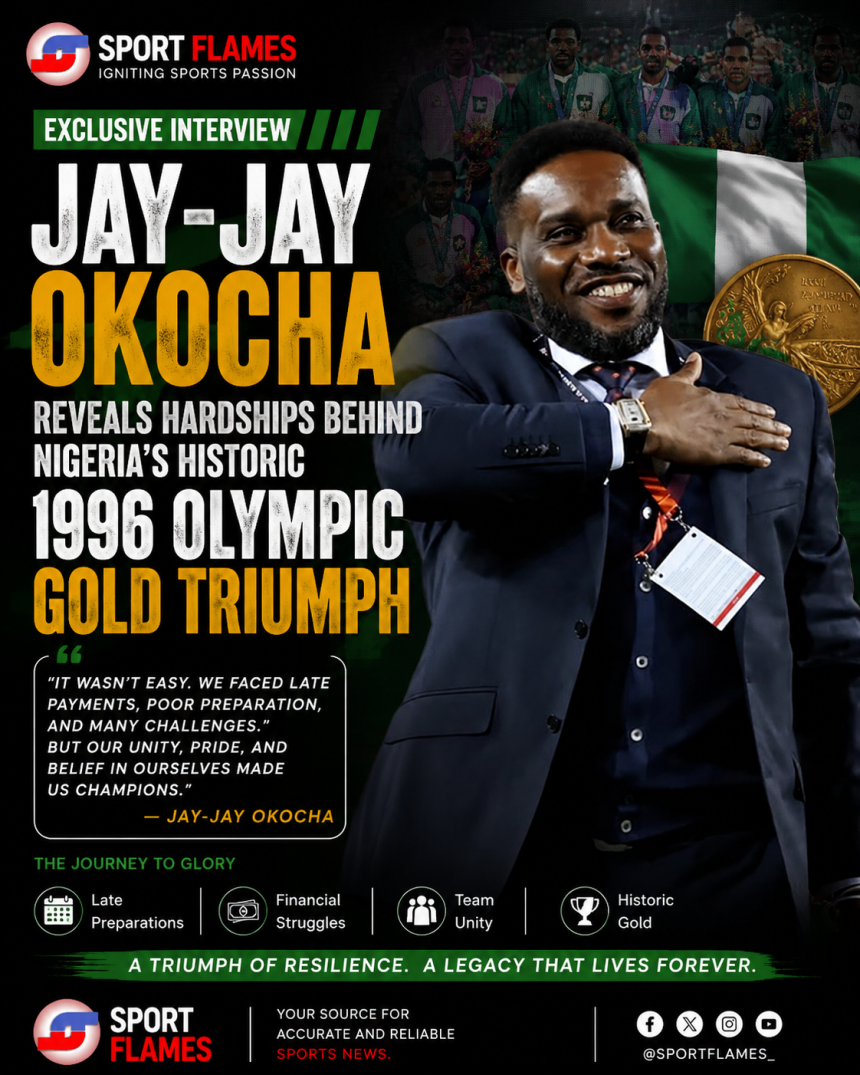


Nigerian football legend Austin “Jay-Jay” Okocha has revealed the extraordinary hardships endured by the Super Eagles squad that won Nigeria’s first-ever Olympic football gold medal at the 1996 Atlanta Olympic Games, exposing the lack of support the team received from the country’s football authorities.
Speaking during an appearance on The Long Form podcast, Okocha recalled the difficult conditions the squad faced on their journey to one of the greatest achievements in Nigerian football history.
“We won the 1996 Atlanta Olympics, but the process was tough. The NFA didn’t pay for our hotel, we ate the same meal for a week. We had to use our own money for accommodation and rented mini vans to stay in camp,” Okocha revealed.
Despite the numerous off-the-pitch challenges, Nigeria’s “Dream Team” defied the odds to produce one of the most memorable runs in Olympic football history. Led by a generation of exceptional talents including Jay-Jay Okocha, Nwankwo Kanu, Daniel Amokachi, Sunday Oliseh, Taribo West, and Celestine Babayaro, the team overcame some of the world’s strongest football nations.
Their remarkable campaign culminated in a dramatic 3-2 victory over Argentina in the gold medal match, securing Nigeria’s first and still only Olympic football title while becoming the first African nation to win Olympic gold in the men’s football event.

According to Okocha, however, the triumph came despite severe logistical failures by the then Nigeria Football Association (NFA), now known as the Nigeria Football Federation (NFF). Players reportedly had to fund their own accommodation, arrange transportation by renting minibuses, and endure repetitive meals throughout the tournament.
The revelations have sparked widespread discussion across social media after excerpts from the interview were shared by Nigerian news platform Instablog9ja. Many supporters expressed disappointment that such an iconic team had to overcome administrative shortcomings in addition to elite international opposition.
Several fans also pointed to similar complaints made by later generations of Super Eagles players, including former captain John Obi Mikel, arguing that longstanding issues involving logistics, funding, and football administration continue to affect Nigerian football.
Nearly three decades after their historic achievement, the 1996 Olympic champions remain celebrated not only for their footballing brilliance but also for their resilience in overcoming difficult circumstances to bring glory to Nigeria.
Okocha’s comments have reignited calls for greater transparency and reform within Nigerian football administration, with many supporters advocating for improved welfare and organisational structures to ensure future generations of Nigerian players receive the support they deserve while representing the country on the global stage.