
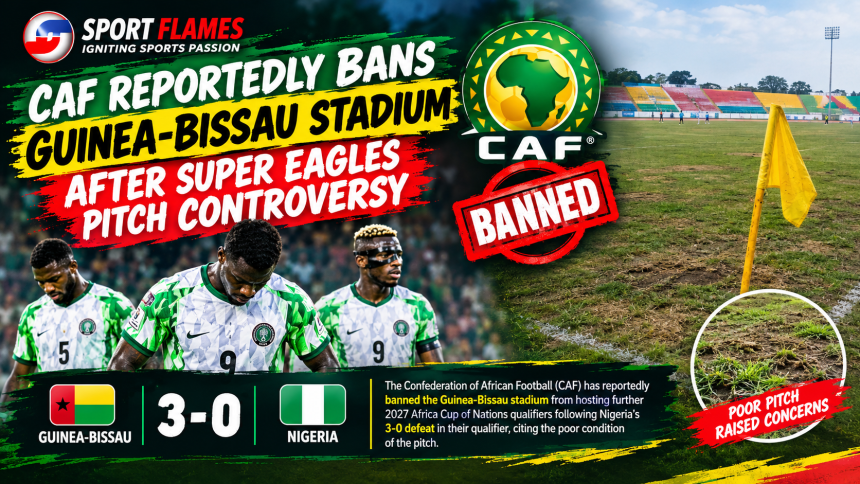


The Confederation of African Football (CAF) has reportedly apologised to the Nigeria Football Federation (NFF) over the poor condition of the pitch at Estádio Nacional 24 de Setembro in Bissau and barred the venue from hosting further 2027 Africa Cup of Nations qualifiers, according to multiple Nigerian media reports.
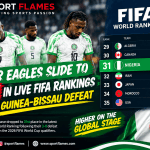
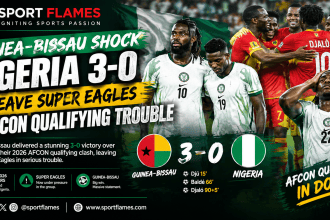
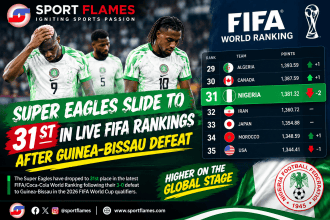
The reported development follows Nigeria’s 3-0 defeat to Guinea-Bissau on September 29 in a Group L qualifier.
Franculino Djú opened the scoring in the 15th minute before Mama Baldé doubled the hosts’ advantage around the 65th minute. Álvaro Djaló then completed the victory in stoppage time as Guinea-Bissau moved top of the group with six points from two matches.
Nigeria remain on three points following their opening 2-1 victory over Madagascar.
Pitch Controversy Intensifies
The condition of the playing surface was a major talking point before and during the match, with heavy rain contributing to a soft, uneven and waterlogged pitch.
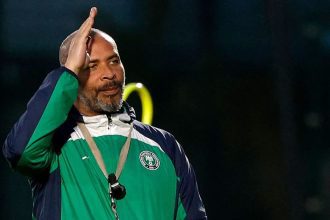
Super Eagles head coach Éric Chelle had already described the surface as “very, very bad” following the team’s training session and repeated his concerns after the defeat.
However, Chelle refused to use the pitch as an excuse for Nigeria’s performance and acknowledged that Guinea-Bissau deserved the victory.
“I apologise to the fans. Guinea-Bissau were the better side. The pitch is also bad, but we accept responsibility,” Chelle said.
Concerns over player safety were also raised, with National Sports Commission chairman Shehu Dikko and Super Eagles players questioning whether the venue was suitable for an international fixture.
Forward Akor Adams later stressed that providing an adequate playing surface should be the “bare minimum” for African football, while accepting that Nigeria remained responsible for the result.
CAF Approval Under Scrutiny
Reports of CAF’s alleged decision have also raised questions about how the stadium was approved in the first place.
Guinea-Bissau had previously been required to play some of their home fixtures at alternative venues, including in Morocco, because of infrastructure concerns. The Bissau stadium was reportedly inspected and approved by CAF approximately a month before the Nigeria fixture following renovation work.

However, according to the reports, CAF subsequently informed the NFF that the condition of the pitch on match day was significantly different from what inspectors had observed during the earlier assessment.
If the reported ban is confirmed, Guinea-Bissau would have to identify another CAF-approved venue for its remaining home qualifiers.
Guinea-Bissau Federation Denies CAF Ban
The Guinea-Bissau Football Federation (FFGB) has strongly disputed the reports.
In a statement, the federation said it had received no decision, notification, report or letter from CAF concerning any stadium ban or closure. It also denied being aware of any apology from CAF to the NFF.
The FFGB said the claims originated from a Nigerian social media account and were not based on an official CAF communication.
The federation further argued that any decision to withdraw a stadium’s approval would normally follow a technical inspection, formal report and an opportunity for the relevant federation to respond.
It also stated that the stadium had undergone inspections and had been approved for other competitions, including aspects of the 2027 African Nations Championship.
No Official CAF Confirmation Yet
As of early October 2026, there has been no publicly confirmed CAF announcement establishing that the Bissau stadium has been banned from hosting further AFCON qualifiers.
For now, the reported apology and venue ban therefore remain unconfirmed, despite claims from multiple Nigerian media outlets.
What is not in dispute is the condition of the pitch and the criticism it generated before and after the match. The result itself also stands, with Guinea-Bissau taking all three points from Nigeria.
The Super Eagles must now turn their attention to the November international window, when they face Tanzania as they attempt to recover from their first competitive defeat under Chelle and improve their position in Group L.
For Guinea-Bissau, the outcome of the stadium controversy could determine where they host their remaining home fixtures and whether they will have to surrender the home advantage they enjoyed against Nigeria.