


A meeting between former Nigeria Football Federation (NFF) officials and representatives of FIFA and the Confederation of African Football (CAF) in Abuja has reportedly been overshadowed by a dispute over the direction of Nigeria’s football reforms.
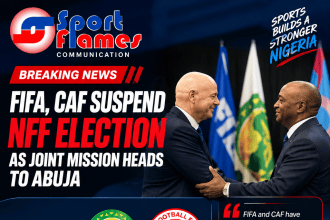
The meeting, held on Tuesday, September 15, 2026, formed part of a two-day FIFA-CAF assessment mission examining the leadership crisis that followed the resignation of NFF President Ibrahim Musa Gusau, General Secretary Mohammed Sanusi and members of the federation’s Executive Committee on August 27. FIFA and CAF subsequently suspended the NFF’s electoral process while assessing the legal, administrative, governance and electoral implications of the situation.
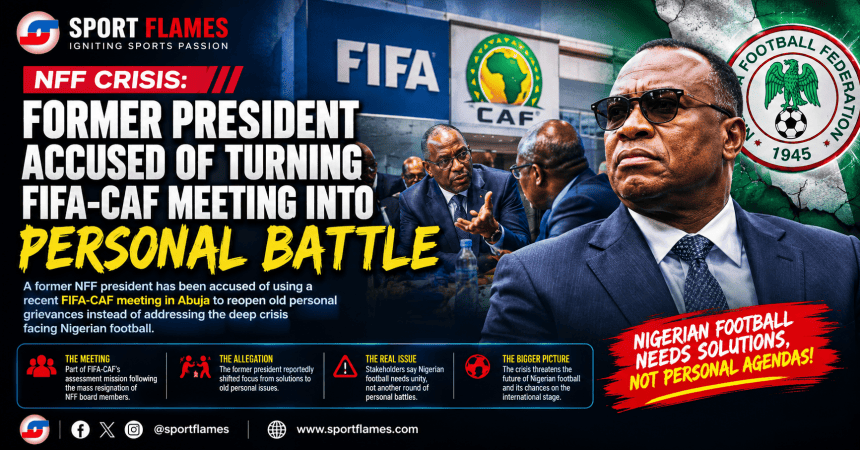
According to reports from the stakeholder meeting, one former NFF president used a significant portion of his intervention to revisit grievances surrounding his previous tenure and the circumstances in which he left office.
The former administrator reportedly highlighted his contributions to Nigerian football and maintained that he had been the federation’s best president, while also arguing that his previous mandate should be restored.
He was also reportedly unwilling to take a position either for or against the proposed Normalisation Committee, insisting that the issue of his own past mandate needed to be addressed first.
Personal Grievances Reportedly Overshadow Reform Talks
The reported intervention allegedly frustrated some of the other stakeholders present, who believed the meeting was intended to focus on the immediate governance crisis and possible solutions for Nigerian football.
Rather than concentrating on the structural and administrative issues currently before FIFA and CAF, the former administrator was reportedly criticised for returning to a dispute dating back more than a decade.
The reported disagreement reflects the wider divisions among Nigerian football stakeholders over how the current crisis should be resolved.
FIFA and CAF have been consulting different groups, including former NFF administrators, State Football Association chairmen, league bodies, players’ representatives, coaches, referees and sports journalists, as they seek to establish the facts surrounding the recent leadership changes and determine a way forward.
Normalisation Committee at Centre of Debate
One of the major issues under consideration is whether Nigerian football should be placed under a FIFA-backed Normalisation Committee during the transition.
Reports indicate that several stakeholder groups, including representatives of players, coaches, referees and league bodies, have expressed support for a Normalisation Committee, while some State FA chairmen have opposed the proposal and argued that the existing NFF Congress should resolve the leadership vacuum.
The proposed arrangement is expected to focus on reforms to the federation’s governance structure and could ultimately pave the way for fresh elections.
The issue is particularly contentious because State Football Association chairmen currently hold significant representation within the NFF Congress. Critics of the existing structure have argued for broader representation of other stakeholders within Nigerian football.
Former Administrators Offer Different Views
The Abuja consultations brought together several former NFF officials with different experiences of the federation.

Former NFF presidents Sani Lulu and Aminu Maigari, former vice-president Senator Obinna Ogba, and former secretaries-general Sani Toro, Musa Amadu and Fanny Amoo were among the football figures involved in the consultations. Former international Segun Odegbami and other stakeholders also participated in the wider engagement.
The presence of former administrators was intended to give FIFA and CAF access to perspectives from people who have previously occupied senior positions within Nigerian football.
However, the reported disagreement involving one former president highlighted the difficulty of finding common ground among stakeholders with different experiences and interests.
Questions Over Nigeria’s Football Governance Structure
The current crisis has also revived longstanding debates about the structure of the NFF Congress and the distribution of voting power.
Critics of the existing system have argued that State FAs wield disproportionate influence, while supporters of the current structure maintain that the federation’s existing congress remains capable of managing the transition.
The disagreement was again evident during the FIFA-CAF consultations, with State FA representatives reportedly rejecting the idea of an externally imposed Normalisation Committee and arguing that Nigerian football should resolve its leadership issues through its established structures.
Meanwhile, other stakeholder groups have backed wider reforms and a temporary arrangement that could address governance concerns before new elections are held.
FIFA and CAF Yet to Decide on Next Step
The FIFA-CAF mission is part of the international football bodies’ response to the unprecedented leadership vacuum created by the mass resignations within the NFF.
The international delegation has been examining the circumstances surrounding the resignations and the suspended electoral process while listening to competing proposals from Nigerian football stakeholders.
No final decision on a Normalisation Committee had been announced at the time of the consultations.
The proposed NFF elective congress scheduled for September 27 has also been thrown into uncertainty following the suspension of the electoral process.
For Nigerian football, the immediate challenge is now to find a transition that addresses the leadership vacuum while also dealing with the deeper governance questions that have emerged.
As FIFA and CAF weigh the various positions presented during their Abuja meetings, stakeholders will be watching closely to see whether the international bodies recommend a Normalisation Committee, reforms within the existing structure, or another transitional arrangement.
For now, the reported clash over the role of a former NFF president has provided another reminder of the divisions that FIFA and CAF must navigate as they seek a path forward for Nigerian football.