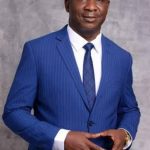



Ibrahim Gusau’s resignation as President of the Nigeria Football Federation (NFF) has deepened concerns over the state of Nigerian football, with the federation facing questions over its leadership, recent national team failures and internal stability.
Gusau announced his resignation on Thursday, 27 August, after weeks of pressure surrounding his administration.
His decision came at a difficult time for Nigerian football, with both the Super Eagles and Super Falcons facing major setbacks in their World Cup campaigns.
The Super Eagles failed to qualify for the 2026 FIFA World Cup, meaning Nigeria will miss the tournament for a second consecutive edition.
The Super Falcons also suffered a major setback after failing to secure qualification for the 2027 Women’s World Cup.
Nigeria, the defending champions, were eliminated from the 2026 Women’s Africa Cup of Nations after a 1-0 quarter-final defeat to Cameroon.
The Falcons then lost 2-1 to South Africa in the qualification play-off, ending the country’s hopes of appearing at the next Women’s World Cup.
The results increased pressure on the NFF leadership and prompted the federation to apologise to President Bola Tinubu and Nigerians.
The NFF also set up a fact-finding committee to investigate the reasons behind the national teams’ disappointing performances.
Internal problems
The pressure on Gusau’s administration has also been linked to reported disagreements within the federation.
Speaking during his resignation announcement, Gusau revealed that communication had broken down between him and some members and structures of the federation.
“I’m not communicating with the board; they are not communicating to me. I’m not communicating with the other assembly,” he said.

There have also been reports that some members of the NFF’s 13-member Executive Committee had resigned or were under pressure to step down.
Gusau, however, did not disclose details about the individual positions of the committee members.
Financial scrutiny
The federation has also come under financial scrutiny.
The EFCC, ICPC and SSS have reportedly been examining the use of a ₦17 billion federal government intervention fund approved for the NFF.
The development has added to calls for greater transparency and accountability in the administration of Nigerian football.
Uncertainty ahead of NFF election
Gusau’s resignation comes just weeks before the NFF’s scheduled elective congress in Lafia, Nasarawa State, on 27 September.
The reported departures of other Executive Committee members have raised questions about the stability of the federation and the future of the electoral process.
Gusau was elected NFF president in September 2022, succeeding Amaju Pinnick.
His administration recorded some notable successes, including the Super Falcons’ 2025 WAFCON victory, which gave Nigeria a record-extending 10th continental title.
However, the failure of the Super Eagles and Super Falcons to qualify for their respective World Cups has placed his tenure under intense scrutiny.