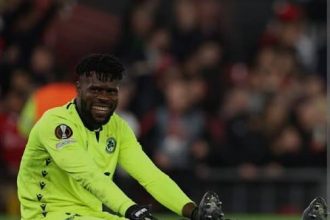

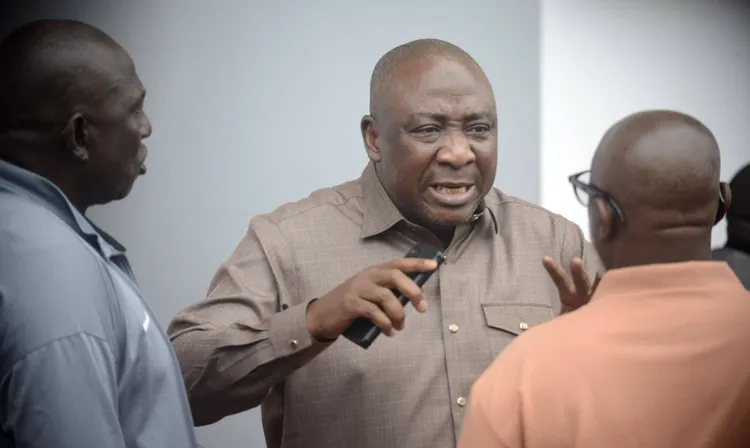


Ibrahim Gusau has resigned as President of the Nigeria Football Federation (NFF), ending his four-year tenure at the helm of Nigerian football.
Gusau announces his resignation on Thursday, 27 August, at a world press conference held at the NFF headquarters in Abuja, bringing an unexpected end to his administration just weeks before the federation’s scheduled elective congress.
Gusau said he reached the decision after consulting with his family, friends and football stakeholders amid mounting pressure on his administration.
His resignation comes at a turbulent period for Nigerian football, with the Super Eagles having failed to qualify for the 2026 FIFA World Cup and the Super Falcons recently losing their place at the 2027 Women’s World Cup.
Those setbacks have intensified scrutiny of the NFF and raised wider questions about the direction of football in the country.
A difficult end to Gusau’s tenure
Gusau took over as NFF president in September 2022 after defeating Peterside Idah in the decisive round of the election.
He secured 39 votes against Idah’s one to succeed Amaju Pinnick.
His tenure produced some notable moments, most prominently the Super Falcons’ 2025 Women’s Africa Cup of Nations triumph, which gave Nigeria a record-extending 10th continental title.
However, the final stretch of his administration was dominated by disappointing results and growing pressure.
The Super Eagles failed to qualify for the 2026 World Cup, leaving Nigeria out of the tournament for a second consecutive edition.
The Super Falcons then suffered a historic setback after failing to qualify for the 2027 Women’s World Cup.
Nigeria entered the 2026 WAFCON as defending champions but were eliminated by Cameroon in the quarter-finals. A 2-1 defeat to South Africa in the subsequent qualification play-off ended their hopes of reaching the World Cup.

For the first time since the tournament began in 1991, Nigeria will not feature at the Women’s World Cup.
More than a leadership change
While Gusau’s resignation marks the end of his administration, the development has also reopened the debate about the state of Nigerian football.
The country continues to produce talented players who compete at the highest level around the world. Yet the national teams and domestic football structure have struggled to consistently reflect that wealth of talent.
The problem is particularly noticeable at the grassroots and domestic levels.
Nigeria has the players, the supporters and the football culture, but questions remain over the development structures available to young players, the strength of the domestic league, football facilities and long-term planning.
For a country that has repeatedly produced exceptional footballers, relying on individual talent cannot be enough.
What happens next?
Gusau’s resignation comes barely a month before the NFF’s scheduled elective congress in Lafia, Nasarawa State, on 27 September.
The election is expected to determine the federation’s next leadership, although reports of resignations involving members of the NFF Executive Committee have created additional uncertainty.
The next administration will therefore inherit more than the responsibility of filling Gusau’s position.
It will face the task of rebuilding confidence in the federation and addressing the structural problems that have continued to affect Nigerian football.