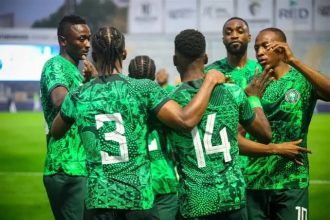

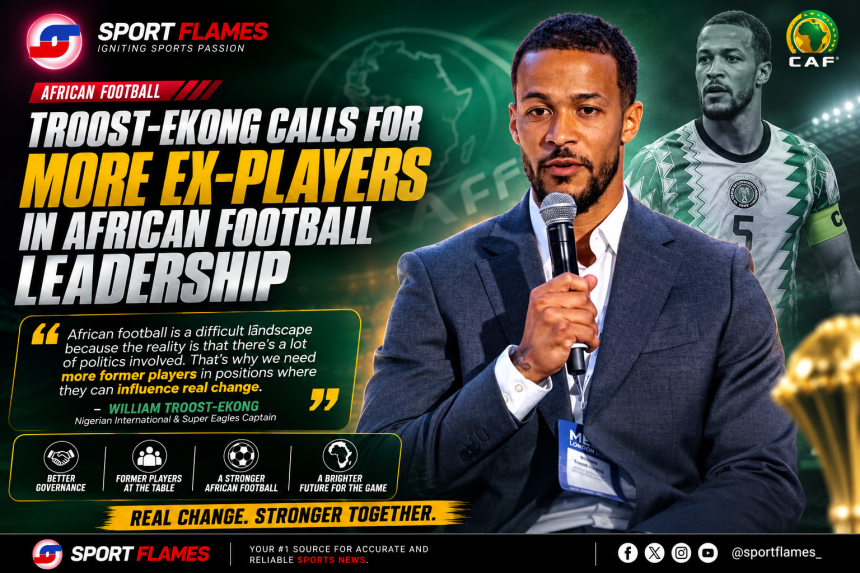


Super Eagles captain William Troost-Ekong has called for greater involvement of former footballers in leadership positions across Africa, insisting that excessive politics remains one of the biggest obstacles to the game’s development on the continent.
Speaking in an exclusive interview with Brila Media, the experienced Nigerian defender stressed that African football needs decision-makers with first-hand playing experience to help implement meaningful reforms.
“African football is a difficult landscape because the reality is that there’s a lot of politics involved. That’s why we need more former players in positions where they can influence decisions and drive real change,” Troost-Ekong said.
The 32-year-old centre-back, who has enjoyed a successful professional career across Europe with clubs in the Netherlands, Turkey, England, and other countries, believes former players possess the practical knowledge needed to improve football administration and better serve the interests of athletes.
As captain of the Super Eagles, Troost-Ekong has become one of the most respected voices in Nigerian football, combining leadership on the pitch with increasing involvement in discussions surrounding the future of the sport.
His comments come amid renewed conversations about governance, transparency, and structural reforms within African football, where issues surrounding administration and political influence have frequently been identified as major barriers to sustained progress.

Beyond his contributions on the field, Troost-Ekong has remained active in football development initiatives, regularly participating in leadership forums, public discussions, and community events while continuing to play a central role in Nigeria’s national team.
The defender’s remarks also align with calls from several African football legends who have advocated for more former professionals to occupy executive positions within football federations and governing bodies.
Supporters of the idea argue that individuals with playing experience are better equipped to address critical issues such as player welfare, youth development, coaching standards, infrastructure, and long-term strategic planning.
As one of Africa’s traditional football powerhouses, Nigeria continues to produce world-class talent, but many stakeholders believe stronger governance and improved administration are essential if the country and the continent as a whole are to maximise their enormous potential.
Troost-Ekong’s comments are expected to generate fresh debate among football stakeholders as African nations continue preparations for upcoming continental and international competitions, while discussions around reforms within the Confederation of African Football (CAF) and national federations remain ongoing.
With his influence both on and off the pitch continuing to grow, the Super Eagles skipper has added his voice to the increasing call for experienced football minds to help shape the future of the game across Africa.