

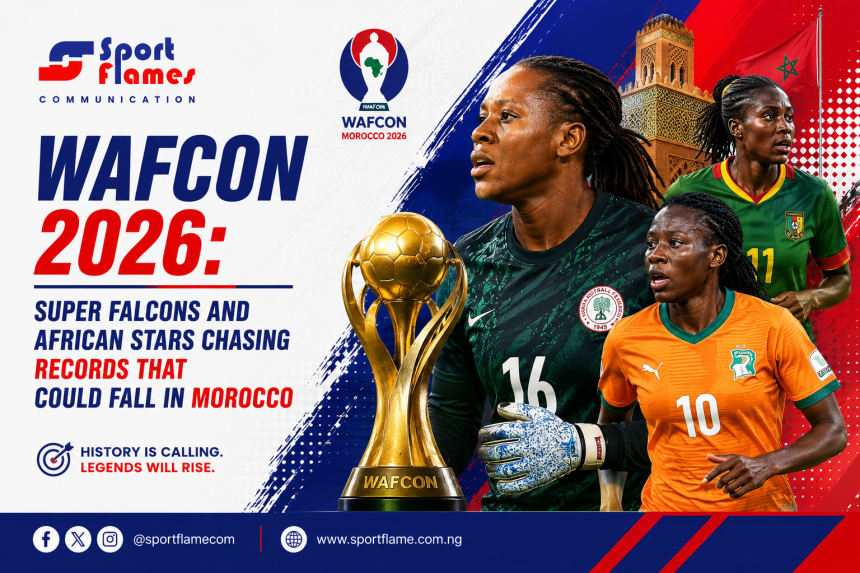


The 2026 Women’s Africa Cup of Nations is shaping up to be more than just another battle for continental supremacy, with the tournament expanded to 16 teams for the first time, Morocco is set to host a historic edition of the WAFCON, and several long-standing records could be challenged when Africa’s best women’s teams meet.
For Nigeria’s Super Falcons, the tournament presents another opportunity to strengthen an already remarkable legacy, the reigning champions are chasing an 11th Women’s Africa Cup of Nations title, a feat that would further separate them from every other team in the history of African women’s football.
But the Super Falcons are not the only team with history in their sights, from goalscoring records to appearances, titles and individual milestones, WAFCON 2026 could produce a new collection of record-breaking moments.
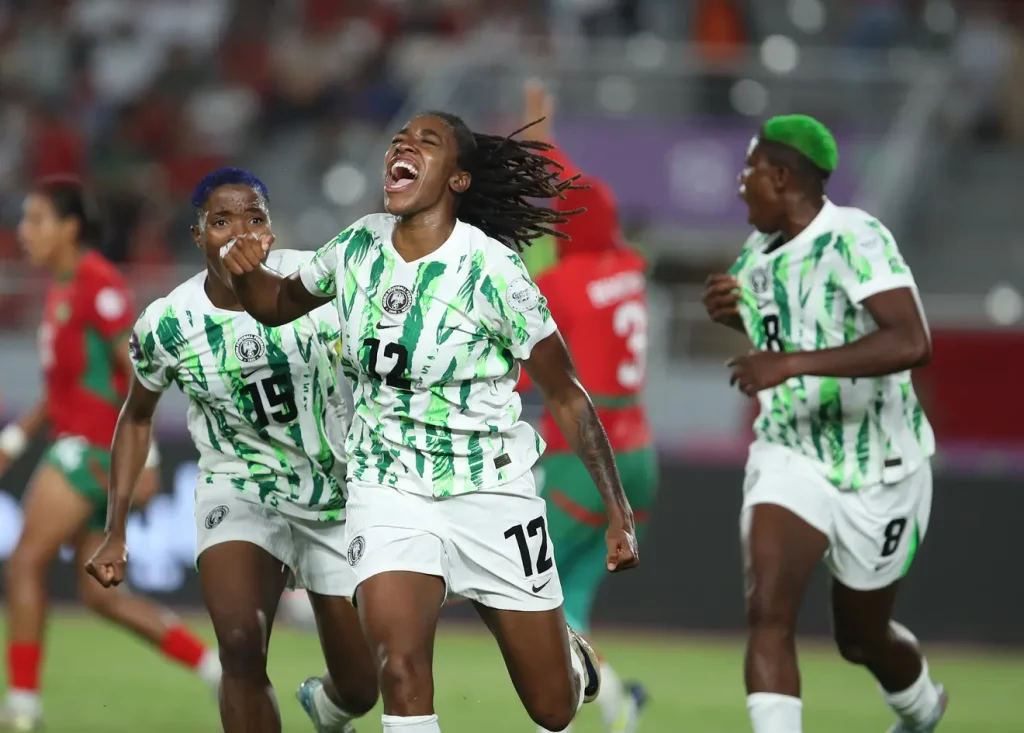
Nigeria remain the undisputed queens of African women’s football, the Super Falcons have won the Women’s Africa Cup of Nations 10 times, more than any other country, and arrive in Morocco as the defending champions.
Their most recent triumph came in the 2024 edition, played in 2025, when Nigeria produced a stunning comeback against hosts Morocco to win the final 3-2 after falling two goals behind, that victory extended Nigeria’s record to 10 WAFCON titles.
Now, the target is number 11, if Justine Madugu’s team successfully defends the trophy, Nigeria will further strengthen their position as the most successful national team in the history of the competition.
The Super Falcons have also reached the podium more times than any other nation, making their consistency across generations one of the most impressive stories in African football.
Nigeria and South Africa are also the only two nations to have qualified for every edition of the tournament, that record alone underlines the Super Falcons’ extraordinary longevity.
One name continues to dominate the WAFCON record books: Perpetua Nkwocha, the former Super Falcons striker remains the competition’s all-time leading scorer with 24 goals, she also holds the record for scoring in the highest number of different Women’s AFCON matches, finding the net in 20 separate games.
But perhaps her most remarkable record is her single-tournament goalscoring achievement, Nkwocha scored 11 goals during the 2010 edition, a record that has remained untouched, with the tournament now expanding to 16 teams, more matches and more attacking talent could provide an opportunity for a new generation of African strikers to challenge the mark.
Breaking 11 goals in a single WAFCON edition would be a remarkable achievement, and if any player manages it, they will have to do what Nkwocha did over a decade ago: combine consistency, fitness and ruthless finishing throughout the tournament.
The Super Falcons also hold the record for the most goals scored by a team in a single edition of the Women’s Africa Cup of Nations, Nigeria scored 28 goals during the inaugural tournament in 1998, that record has survived for decades.
However, the expansion of WAFCON 2026 to 16 teams could create a new opportunity for attacking records to be rewritten, the tournament’s new format means more teams will have a chance to compete at the finals, while the strongest sides could potentially play more matches on their route to the title.
Nigeria’s recent attacking numbers also show why the record could come under pressure, at the last edition, the Super Falcons scored 14 goals, with 11 different players finding the net, that depth in attack could become one of Nigeria’s biggest weapons as they attempt to defend their crown.
Only two players have scored four goals in a single Women’s AFCON finals match, Nigeria’s Perpetua Nkwocha achieved the feat against Cameroon in 2004, while Asisat Oshoala matched the record against Mali in 2016, it remains one of the most difficult individual achievements in the history of the competition.
The expansion of the tournament, however, could provide more opportunities for attacking players to make history, with 16 nations now involved and several emerging teams making their first or early appearances at the highest level, the possibility of a new goalscoring explosion cannot be ruled out.

The likes of Nigeria, Zambia, South Africa and Morocco all possess attacking players capable of changing a match in a matter of minutes.
While the established giants will be chasing records, Cape Verde will be making history simply by stepping onto the pitch, the Blue Sharks will make their Women’s Africa Cup of Nations debut in 2026, becoming the 28th nation to participate in the competition.
They will also become only the second island nation to reach the finals after Réunion featured in 2000, Cape Verde’s qualification is another sign of the growing reach of women’s football across the continent.
The expanded 16-team format has created more opportunities for nations to compete at the highest level, and the tournament could become an important platform for countries looking to build sustainable women’s football programmes.
For Cape Verde, the goal will be to enjoy the moment, but football has a habit of producing surprises, a strong performance could quickly turn a historic debut into one of the stories of WAFCON 2026.
For the host nation, the pressure is different, Morocco have reached the final of the last two editions but have fallen short on both occasions, the Atlas Lionesses lost to South Africa in the 2022 final before Nigeria came from behind to beat them in the 2024 final.
Now, playing at home again, Morocco will be determined to finally break the barrier, a first WAFCON title would be a landmark moment for Moroccan women’s football and could make the 2026 tournament even more memorable.
The home advantage will be important, but so will the pressure that comes with being expected to deliver.
WAFCON 2026 represents a major moment for women’s football on the continent, the expansion to 16 teams means more nations are getting an opportunity to compete, while the established powers are facing a growing group of challengers.
Nigeria remain the team everyone wants to beat, South Africa are looking to return to the summit. Morocco are desperate to win on home soil. Zambia are searching for their first title, and debutants Cape Verde are ready to make their mark.
That combination makes Morocco 2026 particularly exciting, records are made to be broken, but some have survived for decades because they are incredibly difficult to beat.
Perpetua Nkwocha’s 24 goals, her 11-goal single-tournament record.
Nigeria’s 28-goal team record, the Super Falcons’ 10 titles, these are numbers that tell the story of African women’s football.
Now, the next chapter is waiting to be written, and with Nigeria chasing an 11th WAFCON crown, Morocco seeking history and a new generation of African footballers eager to make their names, the 2026 Women’s Africa Cup of Nations could leave behind more than just a champion.
It could leave behind a new set of records.