

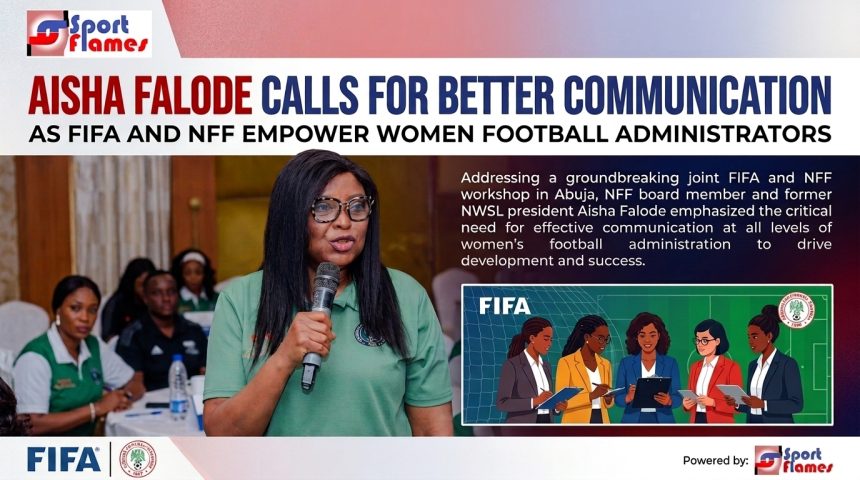


The future of women’s football in Nigeria is not only about what happens on the pitch. Behind every successful team, league and player is a strong administrative structure, clear leadership and effective communication.
That was the message from veteran sports executive and broadcaster Aisha Falode as she played a key role in the recently concluded FIFA/NFF Capacity Building Programme for Women’s Football Administrators in Nigeria.
The programme brought together women administrators for an important learning and development session focused on strengthening leadership, strategy and the overall management of women’s football.
Falode, who has played a significant role in Nigerian sports administration and women’s football, used the opportunity to share her experience with participants while highlighting the importance of building a stronger and more sustainable future for the women’s game.
One of the key areas of discussion was the development of a structured strategy for women’s football in Nigeria.
In her presentation, titled “NFF Women’s Football Strategy: Progress Towards Nigeria’s First Blueprint for Women’s Football,” Falode examined the need for a clear and sustainable framework capable of supporting the growth of the sport from the grassroots to the professional level.
The proposed blueprint places emphasis on areas such as grassroots talent discovery, league development, professionalisation and the long-term growth of Nigeria’s national teams.
For a country blessed with an abundance of female football talent, having a strong structure is critical.
Nigeria has produced some of Africa’s finest female footballers and remains one of the continent’s leading forces in women’s football. However, sustaining that success requires more than talented players.
It requires proper planning. It requires investment. And, perhaps most importantly, it requires administrators who understand how to build and communicate a clear vision.
That was where Falode’s second presentation became particularly important.
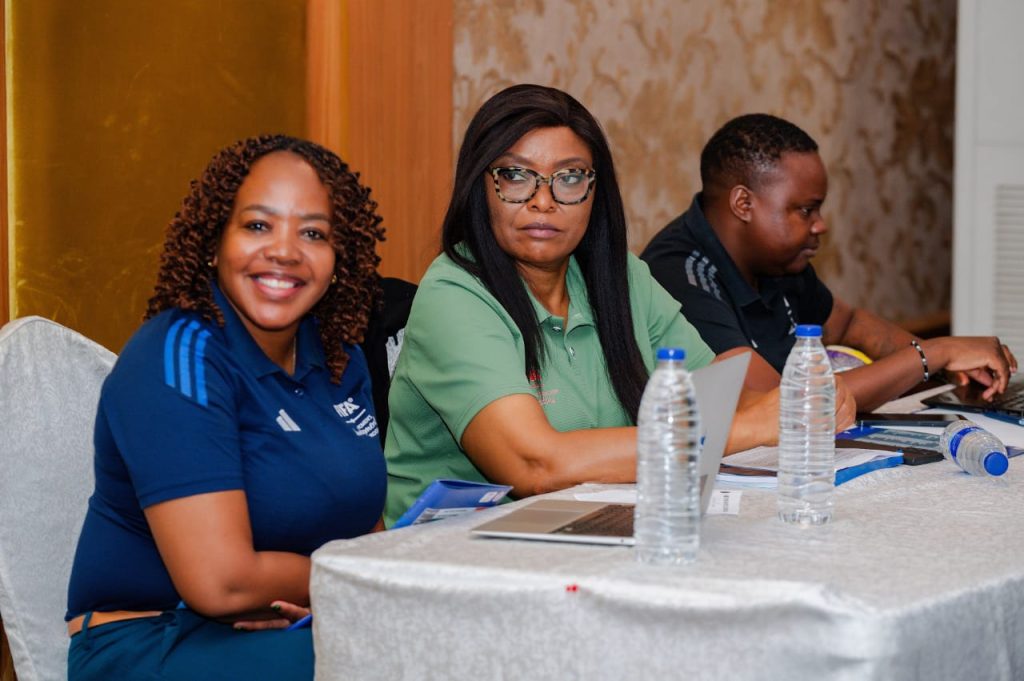
Speaking on “Bridging the Information Gap Through Adequate and Proper Communication,” the experienced broadcaster highlighted the role of effective communication in sports administration.
The message was simple but powerful: a good story that is not properly told can easily be missed.

In the modern sports industry, communication is no longer an afterthought. It is a major part of building a successful sports brand.
For women’s football, effective communication can help clubs and leagues attract sponsors, increase fan engagement, promote players and create greater visibility for competitions.
It can also help change the narrative around women’s sports. Falode encouraged administrators to understand the importance of storytelling and learn how to communicate the achievements of female athletes, clubs and leagues to a wider audience.
This is particularly relevant at a time when the commercial potential of women’s football continues to grow globally.
From sponsorship and media rights to digital content and fan engagement, women’s football is becoming an increasingly important part of the sports business ecosystem.
Nigeria cannot afford to be left behind, the FIFA/NFF Women Capacity Building Programme therefore represents more than just a training exercise. It is an opportunity to equip the people responsible for managing the game with the knowledge and tools required to build stronger institutions.
Falode also stressed the importance of collaboration, innovation and continuous learning in developing the next generation of women football leaders.
Her message reflects a wider reality within Nigerian football: progress on the pitch must be matched by progress in the boardroom.
The Super Falcons can win trophies, young talents can emerge from the grassroots and the domestic league can produce outstanding players, but without strong administration and effective communication, much of that success can struggle to reach its full potential.
The responsibility now lies with stakeholders to turn the lessons from programmes like the FIFA/NFF capacity-building initiative into practical action, the development of women’s football is a story that deserves greater attention not only because of Nigeria’s proud history in the game, but also because of the enormous possibilities that lie ahead.
A stronger administrative structure can create better opportunities for players.
Better communication can attract new audiences and sponsors. And better leadership can help build a women’s football system that is sustainable for generations.
Aisha Falode’s contribution to the FIFA/NFF Women Capacity Building Programme underlines an important point: the future of Nigerian women’s football will be shaped not only by the stars who shine on the pitch, but also by the leaders working behind the scenes.
The next chapter of Nigerian women’s football is being written now. And if the right structures, leadership and communication are put in place, the story could be a remarkable one.