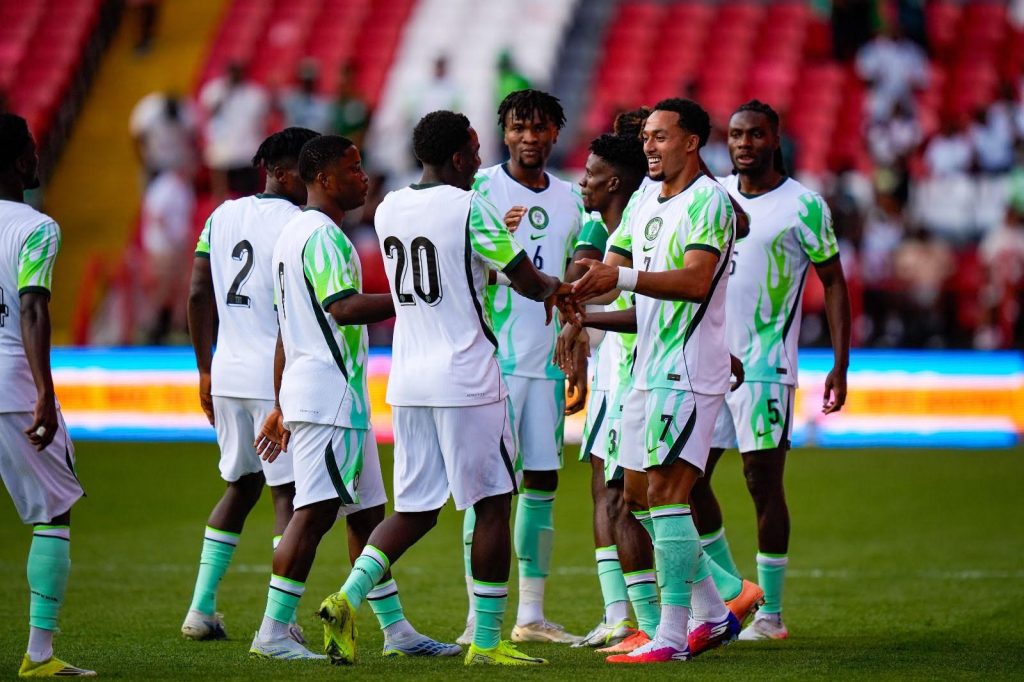

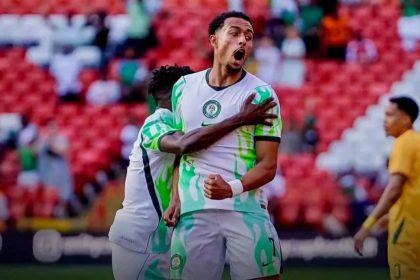


Nigeria’s Super Eagles booked their place in the semi-finals of the Unity Cup with an impressive victory over Zimbabwe, but beyond the result itself, the encounter offered a deeper glimpse into the evolving identity of Eric Chelle’s side.
From defensive solidity to the emergence of fresh attacking stars, the game provided several positives for the Nigerian national team while also exposing areas that still require urgent attention ahead of tougher challenges.
One of the biggest highlights of the evening was the composed and disciplined performance of Nigeria’s central defensive partnership of Nwaiwu and Ogbu.
The duo looked comfortable throughout the contest, showing excellent positional awareness, communication, and physical dominance against Zimbabwe’s attacking line. Their understanding at the heart of the defence brought calmness and structure to the Super Eagles backline, while also giving goalkeeper Okonkwo the confidence and protection needed behind them.
Both defenders were aggressive in duels, quick in recovery situations, and rarely looked unsettled under pressure. More importantly, they maintained concentration for large periods of the game to secure a valuable clean sheet.
For Coach Eric Chelle, their partnership could become one of the biggest positives from the tournament, especially as Nigeria continues searching for consistency and balance in defence.
The performances of full-backs Oputa and Igboke once again highlighted the growing quality and tactical intelligence within the Nigeria Premier Football League (NPFL).
Operating effectively in the 4-3-3 system, both players balanced their defensive responsibilities with attacking support from wide areas. Defensively, they remained compact, disciplined, and difficult to break down, while offensively they made intelligent overlapping runs that stretched Zimbabwe’s defensive shape.
Their energy, composure on the ball, and tactical awareness demonstrated that home-based players can compete comfortably at international level when trusted with opportunities.
At a time when conversations around the inclusion of NPFL talents continue to dominate Nigerian football discussions, performances like this further strengthen the argument for greater integration of local league stars into the national team setup.
The biggest attacking story of the night was undoubtedly the explosive performance of Femi Azeez.
The exciting forward announced himself in spectacular fashion with a brilliant brace, finding the net in the 5th and 63rd minutes to secure Nigeria’s victory. Beyond the goals, Azeez impressed with his movement, composure, direct running, and fearless attacking intent whenever he got on the ball.

He constantly troubled Zimbabwe’s defence with his pace and positioning, showing the confidence and hunger of a player determined to cement his place in the Super Eagles squad. If there were any doubts about his readiness for international football, this performance may have completely erased them.
While Azeez grabbed the headlines with his goals, Tarem Moffi quietly delivered one of the most intelligent attacking displays of the game.
The forward provided both assists for Azeez and played a crucial role in Nigeria’s attacking fluidity. His creativity, movement between the lines, and link-up play consistently created openings for the Super Eagles in dangerous areas.
Moffi’s understanding with Azeez was particularly impressive, with the pair combining effectively throughout the match. His ability to hold up play, release teammates quickly, and make smart decisions in the final third added a different dimension to Nigeria’s attack.
It was the type of mature performance that underlined his growing importance within the team.
Despite the convincing result, the second-half display exposed a worrying issue that appears to be gradually becoming a pattern under Coach Eric Chelle.
After a dominant first-half performance, the Super Eagles looked nervy and disorganized following the restart. Zimbabwe grew into the game and pinned Nigeria back for long spells, forcing the team into uncomfortable defensive situations.
The substitutions introduced from the bench failed to improve Nigeria’s attacking rhythm or provide the creativity needed to regain control of the contest. The Super Eagles struggled to attack with numbers and rarely maximized counter-attacking opportunities, except for the move that eventually produced Azeez’s second goal.
Against stronger opposition, such lapses in concentration and intensity could prove costly.
Chelle will undoubtedly be pleased with the victory and some individual performances, but the inability of his side to sustain dominance across both halves remains an issue that must be addressed quickly.
Another bright spark from the evening was the second-half cameo from NPFL star Tosin Oyedokun.
Although he played limited minutes, the talented midfielder showed flashes of brilliance, confidence in possession, and attacking ambition whenever he was involved. His willingness to drive forward and influence play immediately caught attention.
Oyedokun’s performance once again reinforced the growing belief that the NPFL continues to produce players capable of making meaningful contributions at international level when properly developed and integrated into the national team environment.
For Nigerian football, that may be one of the most important long-term positives from this Unity Cup campaign.