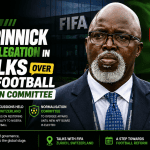

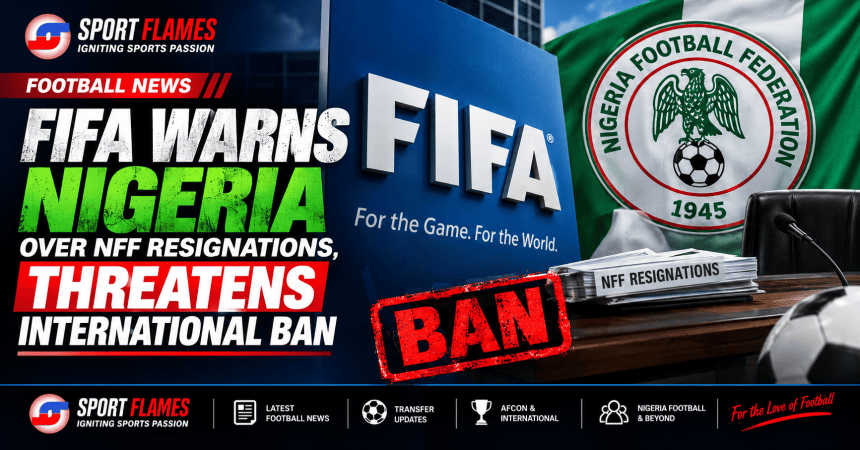


FIFA has formally demanded clarification from Nigerian football authorities over the mass resignation of the Nigeria Football Federation (NFF) leadership, warning that the country could face suspension from international football if concerns over government interference are not adequately addressed.
In a letter dated September 1, 2026, FIFA Secretary General Mattias Grafstrom, writing on behalf of the FIFA Council, expressed concern over reports surrounding the resignation of former NFF president Ibrahim Musa Gusau.
According to FIFA, reports indicated that Gusau resigned following a directive from the Presidency of the Federal Republic of Nigeria.
The world football governing body stressed that all member associations are required to manage their affairs independently and without interference from third parties, including government authorities.
FIFA specifically referenced Articles 14 and 19 of its statutes, which require national football associations to operate autonomously. It warned that any government intervention resulting in the removal of elected officials could constitute a violation of FIFA regulations under Article 13.
FIFA has therefore requested confirmation from the NFF secretariat and the National Sports Commission that Gusau’s resignation was voluntary and made without external pressure.
The organisation has also asked the Nigerian government to provide an official explanation of the circumstances surrounding the resignations and assurances that the NFF will continue to operate in accordance with its statutes and FIFA regulations.
FIFA warned that failure to provide satisfactory responses could result in the immediate suspension of the NFF from all FIFA and CAF competitions and activities.
Should such a suspension occur, a FIFA/CAF Normalisation Committee could be appointed to take control of the federation’s day-to-day affairs and oversee the organisation of fresh elections.
The NFF leadership resigned on August 27 after Gusau announced that he, General Secretary Mohammed Sanusi and the entire executive committee had stepped down.
Gusau said the decision followed consultations with family members, friends and football stakeholders and was aimed at creating room for comprehensive reforms within Nigerian football.

The resignation came amid mounting criticism over the performance and administration of the country’s national teams.
The Super Eagles failed to qualify for the 2026 FIFA World Cup for the second consecutive edition, while the Super Falcons missed out on qualification for the 2027 FIFA Women’s World Cup for the first time since the tournament’s inception in 1991.
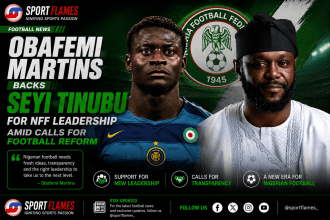
Following the resignations, President Bola Tinubu’s administration called for comprehensive reforms of Nigerian football, focusing on governance, administration and development.
Interim arrangements were subsequently introduced, while the NFF elective congress originally scheduled for September was suspended pending the reform process.
However, the developments have raised concerns about whether the reform process could violate FIFA’s requirement for football associations to remain independent from government control.
There had also been speculation that the former NFF leadership was under pressure from government and security agencies over issues including the management of funds allocated to the federation.
Nigerian officials and some football stakeholders have maintained that the resignations were voluntary and designed to prevent Nigeria from being sanctioned by FIFA.
Former Super Eagles captain Segun Odegbami also welcomed the departures, arguing that they removed the immediate threat of a FIFA ban and created an opportunity to address longstanding problems within Nigerian football.
The latest intervention from FIFA, however, means Nigerian authorities must now tread carefully.
While the government’s proposed reforms could provide an opportunity to restructure the country’s football administration, FIFA’s warning makes it clear that any changes must respect the independence of the NFF.
Nigeria now faces a crucial period in which it must convince FIFA that the leadership changes and proposed reforms comply with international football regulations.
Failure to do so could see the Super Eagles, Super Falcons and Nigeria’s other national teams excluded from FIFA and CAF competitions, adding another major crisis to an already turbulent period for Nigerian football.