
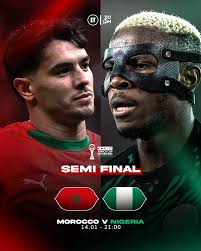


The 2025 Africa Cup of Nations has reached its decisive phase, and Nigeria’s Super Eagles are preparing for a high-stakes semifinal against host nation Morocco on January 14, 2026, in Rabat. However, on the eve of the encounter, controversy has overshadowed the football.
- The Officials: A Neutral Panel That Raised Red Flags
- A Tournament Already Clouded by Officiating Debates
- The Outcry: Nigerian Fans Warn of a “Setup”
- Media Amplification and Continental Reactions
- Morocco and CAF Push Back
- Why This Matters: Rivalry, History, and the Weight of AFCON
- Final Word: Football Will Decide the Truth
On January 13, the Confederation of African Football (CAF) announced the match officials for the semifinal, triggering a wave of backlash from Nigerian fans who believe the appointments tilt the scales in favor of the host nation. What should have been pure anticipation has instead evolved into suspicion, tension, and a familiar debate about officiating integrity at AFCON.
The Officials: A Neutral Panel That Raised Red Flags
CAF appointed Ghanaian referee Daniel Nii Ayi Laryea to officiate the semifinal. Laryea is an experienced official with multiple continental assignments to his name. He will be assisted by South African Zakhele Thusi Granville Siwela, with Abongile Tom, also from South Africa, serving as VAR, alongside a Tunisian assistant VAR. Additional officials come from Lesotho, Mozambique, Rwanda, and Kenya.
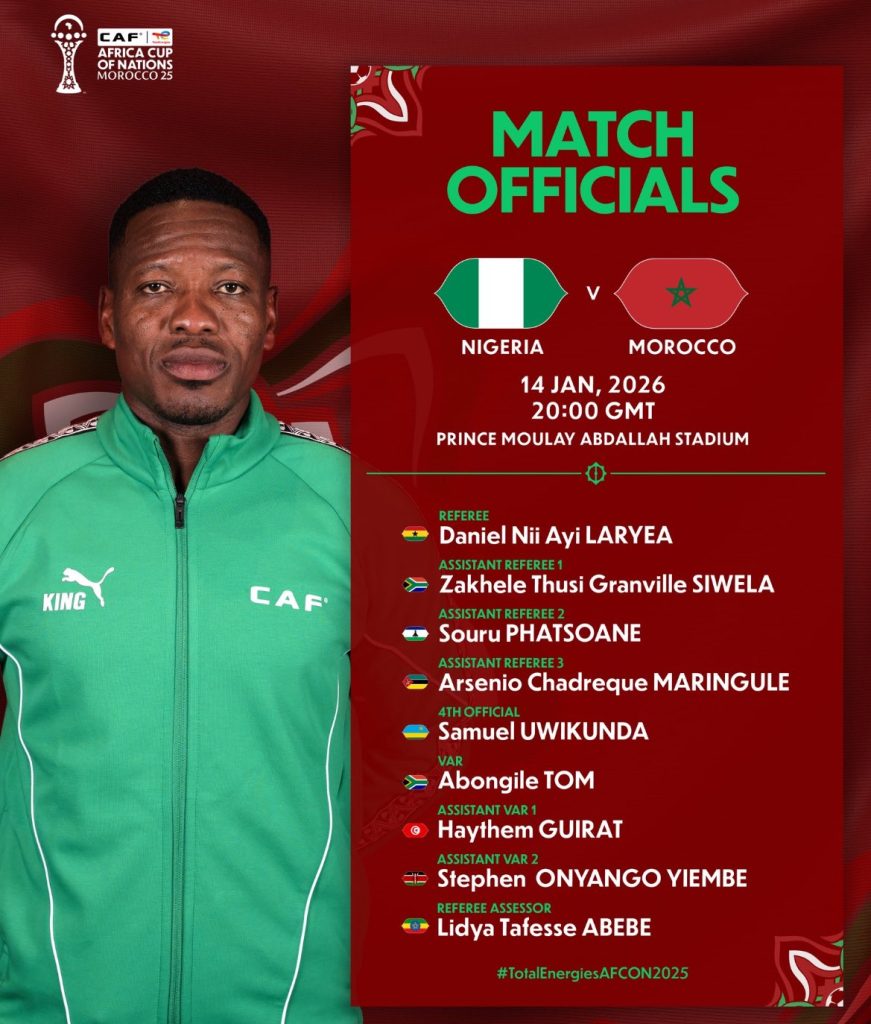
On paper, the panel appears neutral; none of the officials are from Nigeria or Morocco. In practice, however, the national affiliations of key officials have sparked distrust among Nigerian supporters.
Ghana’s historic football rivalry with Nigeria, South Africa’s perceived competitive distance from Nigerian football dominance, and Tunisia’s North African proximity to Morocco have combined to create a perception of indirect bias, regardless of individual competence.
A Tournament Already Clouded by Officiating Debates
This is not the first time refereeing has come under scrutiny at AFCON 2025.
Morocco’s journey to the semifinals has been accompanied by persistent allegations of favorable officiating, most notably during their quarterfinal victory over Cameroon. In that match, Cameroon supporters and analysts argued that at least two penalty decisions were overlooked calls that could have significantly altered the outcome.
Conversely, Nigeria’s own quarterfinal win over Algeria also generated complaints from Algerian fans. However, match data including possession, shots on target, and territorial dominance suggested Nigeria was the superior side, weakening claims of referee-assisted progress.
These precedents have intensified Nigerian fears that the semifinal officiating could become a decisive, non-footballing factor.
The Outcry: Nigerian Fans Warn of a “Setup”
Nigerian fans reacted swiftly and loudly across social media platforms. Within hours of the announcement, timelines were flooded with accusations of bias, sarcastic humor, memes, and outright claims of institutional manipulation.
Many fans focused on the psychological dimension, arguing that a Ghanaian referee might subconsciously overcompensate to avoid appearing pro-Nigeria, thereby favoring Morocco in marginal decisions.
Others described the officiating lineup as a deliberate attempt to place Nigeria at a structural disadvantage playing against the host nation, a partisan crowd, and officials perceived as unsympathetic.

Humor masked anxiety. Jokes referencing the Ghana-Nigeria rivalry, including the ever-present jollof rice banter, circulated widely. Memes portrayed confusion, exaggerated referee celebrations, and exaggerated pre-match despair, reflecting deeper concerns about fairness.
Media Amplification and Continental Reactions
The controversy quickly moved beyond fan spaces. Regional and continental media outlets highlighted Nigerian reactions, framing the appointment as another flashpoint in AFCON’s long history of officiating disputes.
Some commentators noted irony in Nigeria’s previous opposition to certain referee appointments earlier in the tournament, while Moroccan fans countered that the same Ghanaian referee had previously denied Morocco clear penalties, arguing that bias cuts both ways.
Nonetheless, the dominant Nigerian narrative remains one of apprehension rather than contradiction.
Morocco and CAF Push Back
Morocco head coach Walid Regragui dismissed allegations of referee favoritism, labeling them excuses from opponents unwilling to credit Morocco’s performances. He insisted the only advantage Morocco possesses is their home support, expected to exceed 65,000 fans in Rabat.
Meanwhile, Nigeria Football Federation (NFF) President Ibrahim Gusau sought to calm tensions, stating that he has no fears of officiating bias and believes the match will be decided fairly on the pitch.
Despite these assurances, concerns persist among fans, particularly given reports that ticket sales overwhelmingly favor Moroccan supporters, creating an intimidating environment for the Super Eagles.
Why This Matters: Rivalry, History, and the Weight of AFCON
This controversy is about more than one match. It reflects the emotional gravity of AFCON, where football intersects with national pride, regional rivalries, and historical mistrust of football institutions.
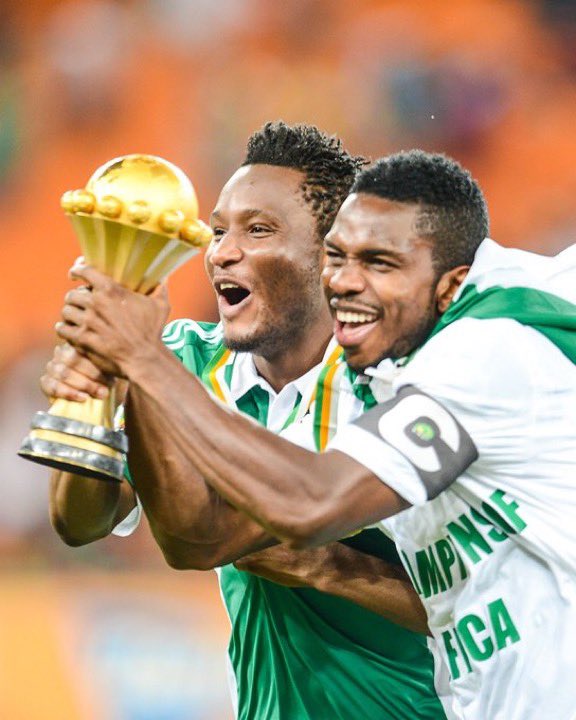
Nigeria, chasing a fourth AFCON title, must confront not only a technically strong Moroccan side but also the psychological weight of playing the hosts under intense scrutiny. For many fans, the narrative has become “Africa versus the Super Eagles.”
Final Word: Football Will Decide the Truth
Ultimately, the semifinal itself will define the narrative.
If Nigeria wins, the controversy will fade into a footnote fueling motivation rather than resentment. If they lose under contentious circumstances, the referee appointment will be remembered as symbolic of deeper systemic issues within African football.
For now, anticipation and anxiety coexist. One thing is certain: when Nigeria and Morocco meet in Rabat, it will be more than a football match; it will be a continental spectacle watched through a lens of suspicion, passion, and history.