
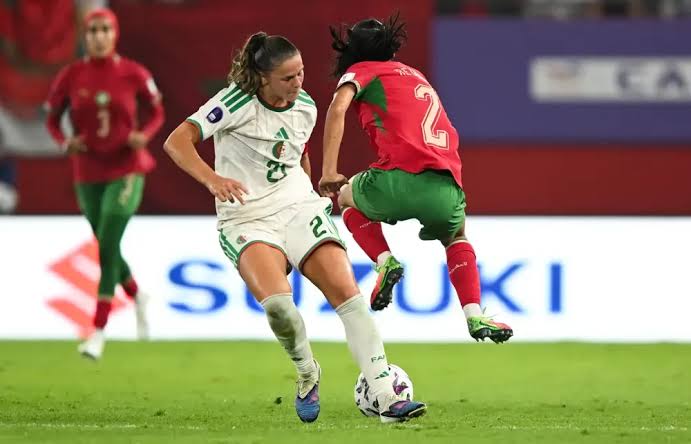


Morocco and Algeria have secured places in the semi-finals of the 2026 Women’s Africa Cup of Nations (WAFCON), while also booking their tickets to the 2027 FIFA Women’s World Cup in Brazil.
The two North African nations achieved the feat after contrasting quarter-final victories on Saturday, August 8, marking another major moment in the growth of women’s football on the continent.
Morocco defeated defending champions South Africa 2-1 in Rabat, while Algeria produced a comeback victory over Côte d’Ivoire by the same scoreline in Casablanca. Both teams have now guaranteed themselves places at the 2027 Women’s World Cup.
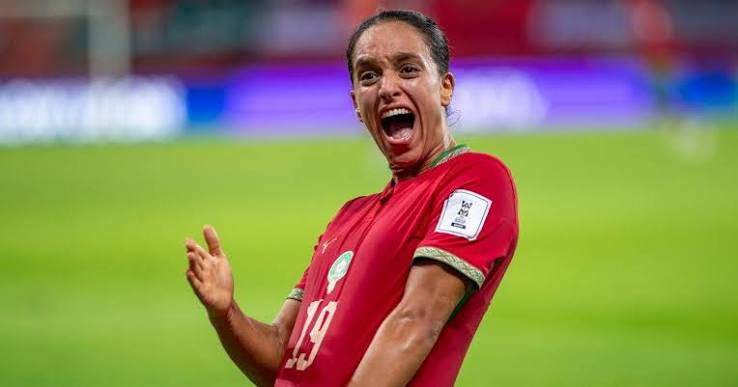
Hosts Morocco had to withstand a strong second-half fightback from South Africa before securing their place in the last four.
Sakina Ouzraoui opened the scoring in the 31st minute, giving Morocco the advantage before Hanane Ait El Haj doubled the lead six minutes into the second half after converting a penalty.
South Africa responded through Thembi Kgatlana in the 67th minute, setting up a tense final period, the Atlas Lionesses, however, held their nerve to secure a 2-1 victory and continue their impressive run on home soil.
The result also gives Morocco another opportunity to make history, no North African nation has previously won the Women’s Africa Cup of Nations. Nigeria remain the dominant force in the competition with 10 titles, while Equatorial Guinea have won twice and South Africa once.
Morocco came close to winning the tournament four years ago, finishing as runners-up to South Africa, now, playing on home soil again, they are two matches away from potentially claiming their first continental title.
Algeria’s achievement was equally significant, the North Africans reached their first-ever WAFCON semi-final after recovering from a goal down to defeat Côte d’Ivoire 2-1.
Côte d’Ivoire took the lead in the 29th minute through Ines Konan and appeared to be in control during the opening period, the game changed dramatically before half-time when Côte d’Ivoire were reduced to 10 players following N’Sira Ouedraogo’s red card.
Algeria took advantage after the break, substitute Ines Khiri equalised before Amira Braham completed the comeback, with both goals coming within six minutes of each other.
Côte d’Ivoire had an opportunity to regain the lead when Rebecca Elloh struck the post from the penalty spot, but Algeria survived the scare, after struggling to create significant opportunities during the first half, Algeria became increasingly dangerous after the interval and could have won by a bigger margin.
The victory means Algeria will compete at the FIFA Women’s World Cup for the first time in the country’s history.
The progress of Morocco and Algeria represents a major development for women’s football in North Africa, for years, Nigeria, South Africa and Equatorial Guinea have dominated the WAFCON conversation.

Morocco’s emergence as a continental power and Algeria’s historic semi-final run show that the competitive landscape is changing, both nations now have an opportunity to go beyond simply qualifying for the World Cup, they can also compete for the WAFCON title.
The 2026 WAFCON carries an additional significance because it doubles as Africa’s qualifying tournament for the 2027 FIFA Women’s World Cup.
The four semi-finalists earn direct qualification for the World Cup in Brazil, making the quarter-finals especially important.
Morocco and Algeria have therefore achieved two objectives at once: reaching the WAFCON semi-finals and securing their places at the world’s biggest women’s football tournament.
For Algeria, the achievement is historic, for Morocco, it represents another opportunity to build on the country’s rapid rise in women’s football.
The developments also have major implications for the defending champions, Nigeria, the Super Falcons entered WAFCON 2026 as the most successful team in the tournament’s history, having won the title 10 times.
However, their quarter-final against Cameroon now carries even greater significance, the winner will face Morocco in the semi-final, meaning Nigeria would have to overcome Cameroon before facing the tournament hosts in the last four.
Cameroon, meanwhile, are also fighting for a place at the 2027 Women’s World Cup, the knockout stage therefore has enormous consequences for every remaining team.
Morocco and Algeria’s progress is more than just a successful weekend for two national teams, it is evidence of the increasing investment, development and competitiveness of women’s football across Africa.
Morocco have already demonstrated their ability to compete at the highest level, while Algeria’s first-ever World Cup qualification represents a landmark achievement, with both teams now in the WAFCON semi-finals, North Africa has guaranteed itself a strong presence in the final stages of the tournament.
The biggest question now is whether either team can go all the way, Morocco have home advantage and the backing of their supporters, Algeria have momentum and the confidence that comes from making history.
Nigeria’s Super Falcons remain the record champions, while Cameroon, Ghana and Malawi are also chasing their own place in the history books.
One thing is already certain: WAFCON 2026 has produced a major shift in the African women’s football landscape, Morocco and Algeria have not only qualified for the 2027 Women’s World Cup.They have announced themselves as serious contenders for African football’s biggest women’s prize.