
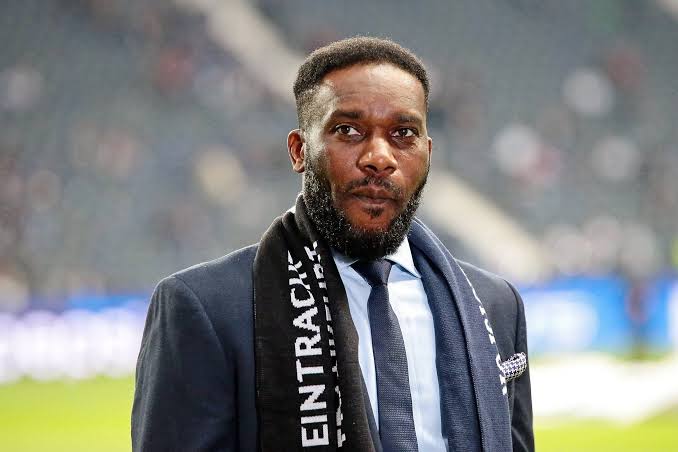


Super Eagles legend Jay-Jay Okocha has opened up about why former Nigerian football stars, including himself, have often remained silent when it comes to criticising the country’s football administration.
Okocha admitted that personal relationships, fear and the desire to protect themselves can make it difficult for former players to speak openly about problems within the Nigeria Football Federation (NFF).
The former Super Eagles captain made the comments while appearing on The Obi One Podcast, hosted by former Nigeria international John Mikel Obi. His remarks come after Nigeria missed the 2026 FIFA World Cup and the Super Falcons subsequently failed to qualify for the 2027 Women’s World Cup.
During the discussion, Mikel Obi was praised for openly criticising issues surrounding Nigerian football administration.
Okocha admitted that he respected Mikel’s willingness to speak publicly, saying he did not believe he had the same courage because he lives in Nigeria.
The former Bolton Wanderers star explained that the situation can be different for someone who remains based in the country.
Okocha’s comments provide an insight into why some of Nigeria’s most respected former footballers have rarely been as outspoken about the NFF as supporters might expect.
One of the most striking parts of the conversation came when Okocha discussed his relationship with the NFF leadership.
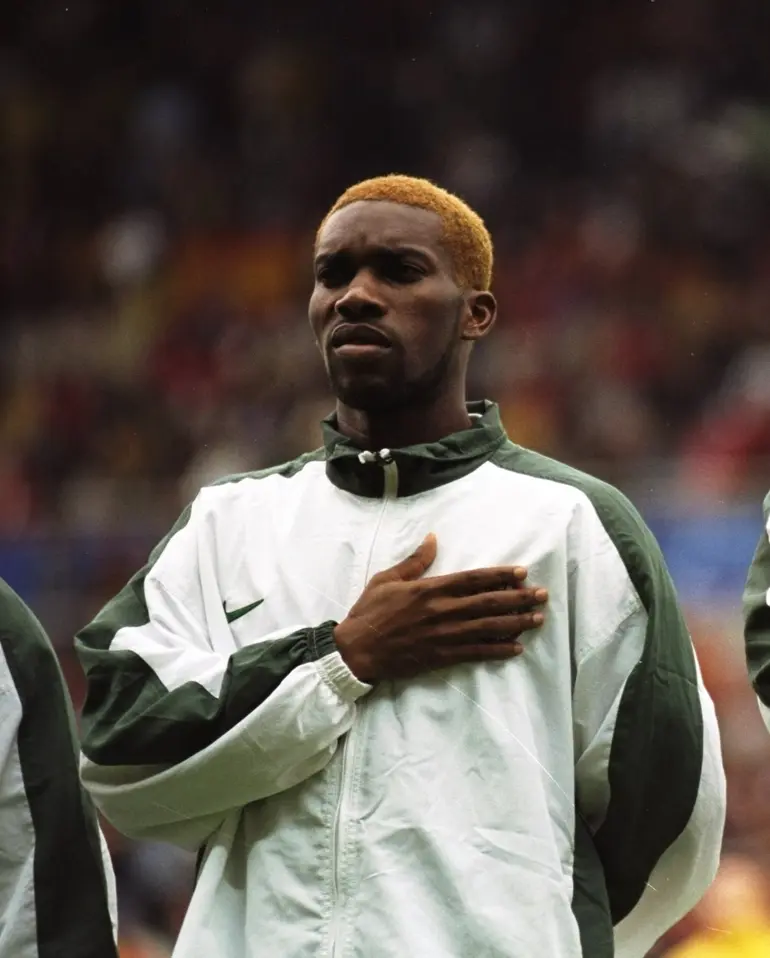
He acknowledged that personal relationships can make criticism more complicated.
Okocha said the NFF president is his friend and admitted that this makes it difficult for him to speak openly.
He also pointed to what he described as a tendency to protect themselves and “sweep things under the rug.”
The comments highlight the tension between personal relationships and public responsibility for former players who remain influential figures in Nigerian football.
Mikel Obi has become increasingly vocal about Nigerian football administration, particularly following the Super Eagles’ failure to qualify for the 2026 World Cup.
During the podcast discussion, Mikel suggested that speaking openly about the country’s football problems can come with consequences.
Okocha did not dismiss that concern.
Instead, he acknowledged that fear and the instinct for self-preservation can influence how people respond to problems within the system.
For Okocha, however, the issue has now reached a point where remaining silent is becoming increasingly difficult.
Okocha explained that Nigeria’s football problems do not only affect supporters and current players.
They also affect former internationals who represent the country internationally.
The Super Eagles failed to qualify for the 2026 FIFA World Cup after losing to DR Congo in the African play-off final.
The result meant Nigeria missed a second consecutive edition of the tournament.
The situation became even more painful for Nigerian football after the Super Falcons also failed to secure direct qualification for the 2027 Women’s World Cup following their disappointing WAFCON campaign.
For a country with Nigeria’s football history and talent pool, the back-to-back failures have intensified questions about the structures surrounding the national teams.
Okocha revealed that people outside Nigeria also question him about the country’s football struggles.
He mentioned being asked by football personalities, including Brazilian legend Ronaldinho, why Nigeria has failed to qualify for the World Cup.
That makes it difficult for him to simply ignore what is happening.

According to Okocha, there is a limit to how much he can separate himself from Nigeria’s football problems because the country’s failures also affect him personally.
The comments show that the former captain remains emotionally invested in the Super Eagles despite being retired from international football.
Okocha also used his own playing career to explain why he remains concerned about administrative decisions.
The former midfielder recalled missing a World Cup after Nigeria’s final qualifying match was moved to Kano.
Okocha questioned the decision to play such an important fixture in difficult conditions, particularly for players arriving from Europe.
He recalled travelling from London and described the heat and conditions as a major challenge for players who were accustomed to European environments.
For Okocha, the experience remains an example of how decisions made away from the pitch can influence a national team’s chances of success.
Okocha’s comments could reignite debate over the role former Super Eagles players should play in Nigerian football.
Many supporters expect legends who have experienced the highest levels of international football to become stronger voices for reform.
Others believe former players can have more influence by working within the system rather than publicly attacking it.
Okocha’s admission suggests that the reality is more complicated.
Former players may have relationships with administrators, business interests, family considerations and other reasons for avoiding direct confrontation.
The latest controversy also reinforces the argument that Nigeria’s football challenges cannot be solved simply by changing players or coaches.
The country continues to produce talented footballers competing at some of the biggest clubs in Europe.
Yet converting that talent into consistent success at international level remains a major challenge.
Qualification failures, administrative disputes, preparation issues and questions about football infrastructure have repeatedly generated criticism.
Okocha’s comments suggest that former players are increasingly aware that these problems require more than tactical changes.
Okocha has not positioned himself as a direct opponent of the NFF.
Instead, his comments reveal the difficult position occupied by former national-team stars.
He wants Nigerian football to succeed, but he also acknowledges that personal relationships and fear can make criticism difficult.
That admission may be uncomfortable for some supporters, but it provides a rare glimpse into the pressures surrounding football’s most influential former players.
For Nigeria, the bigger question is whether the current crisis will encourage more former internationals to speak openly about the problems they see.
The Super Eagles have already paid a heavy price for their failure to qualify for the 2026 World Cup.
The Super Falcons’ subsequent World Cup setback has added further pressure.
If Nigerian football is to recover, the conversation may need to move beyond the pitch and towards the structures responsible for building and managing the national teams.
For Okocha, that conversation has clearly become impossible to ignore.