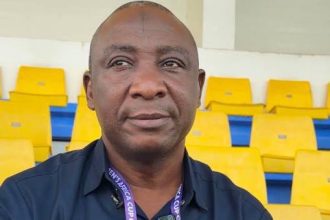

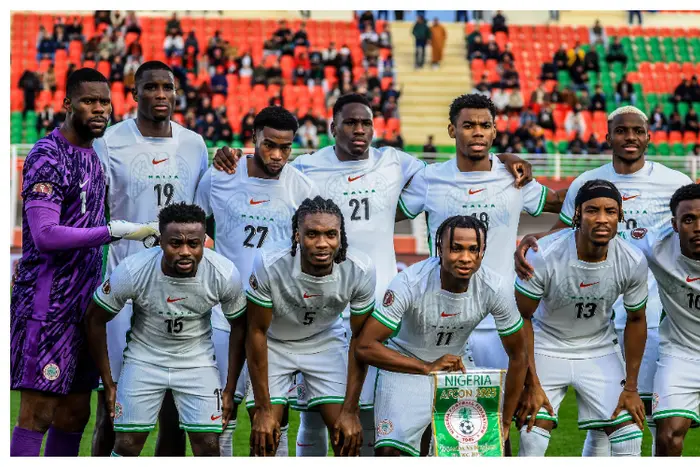


The conversation around Nigeria’s football struggles has taken another twist after former Super Eagles striker Peter Ijeh shifted the spotlight away from the players and placed the blame on the Nigeria Football Federation (NFF). Rather than questioning the talent available to the national team, Ijeh believes the biggest obstacle to Nigerian football remains the absence of a solid and accountable structure.
Nigeria’s failure to qualify for the 2026 FIFA World Cup continues to generate strong reactions from former players, coaches and football stakeholders. While many have criticised the performances on the pitch, Ijeh insists the deeper problems lie within the administration of the game.
Speaking on the current state of Nigerian football, the former international argued that success cannot be achieved without proper organisation and accountability.
According to him, every successful football nation operates with a clear system that supports development from the grassroots to the senior national teams. Nigeria, however, continues to struggle because those structures are either weak or deliberately ignored.
Ijeh claimed that accountability only becomes possible when the right structures are in place, suggesting that the lack of proper football administration has slowed the country’s progress despite its enormous talent pool.
One of Ijeh’s strongest comments centred on what he described as individuals benefiting from the current system.
The former striker alleged that certain people have no interest in seeing Nigerian football function properly because a well-organised structure would expose poor decisions and demand accountability. According to him, while the wider football ecosystem suffers, a small group continues to profit from the dysfunction.
His remarks reflect a growing concern among former players who believe administrative issues have become one of the biggest obstacles preventing Nigeria from competing consistently with Africa’s leading football nations.
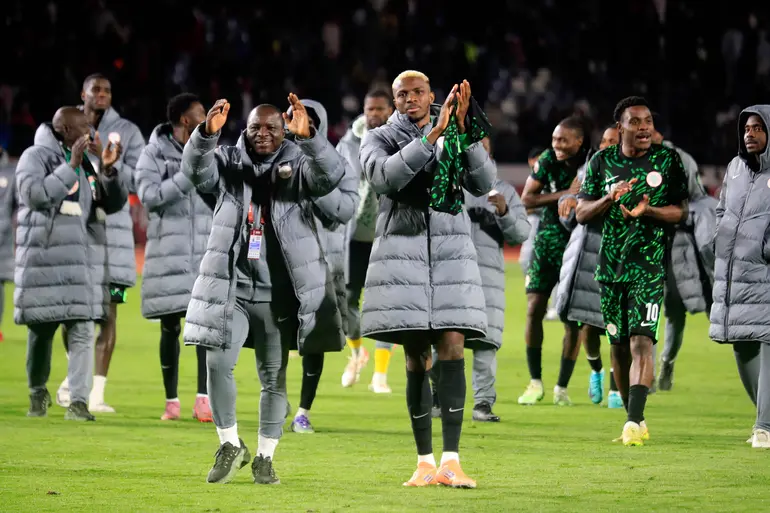
One point that continues to unite many former internationals is that Nigeria has never lacked football talent.

From the NPFL to academies across Europe, Nigerian players continue to shine at club level. Stars like Victor Osimhen, Ademola Lookman, Wilfred Ndidi and Alex Iwobi have proven they can compete at the highest level.
However, translating that individual quality into consistent success with the Super Eagles has remained a challenge. The inability to qualify for the 2026 FIFA World Cup has only strengthened calls for long-term planning rather than short-term fixes.
Ijeh believes that until proper football structures are established, Nigeria may continue to fall behind nations that have invested heavily in planning, youth development and administration.
Nigeria’s absence from the ongoing FIFA World Cup has forced many stakeholders to reflect on what went wrong.
Several African countries have impressed on the global stage, reinforcing the belief that consistent planning and sound football management can deliver results. For Nigeria, the disappointment has triggered wider conversations about leadership, accountability and the future direction of the Super Eagles.
Many former players have offered different solutions, but Ijeh believes genuine progress will only come when football administrators prioritise structure over personal interests.
Peter Ijeh’s criticism is unlikely to end the debate surrounding Nigerian football, but it highlights an issue many have repeatedly raised over the years. Talent alone is rarely enough to achieve sustained success at international level.
Nigeria continues to produce world-class footballers capable of competing across Europe’s biggest leagues. The next challenge is creating an equally strong football system that supports those players from youth development to the senior national team.
For the Super Eagles to return among Africa’s elite and compete consistently on the world stage, reforms may need to begin far away from the pitch inside the structures responsible for managing the game itself. As Nigerian football looks ahead to the 2027 AFCON and the road to the 2030 FIFA World Cup, many will hope that calls for accountability finally translate into meaningful action.