
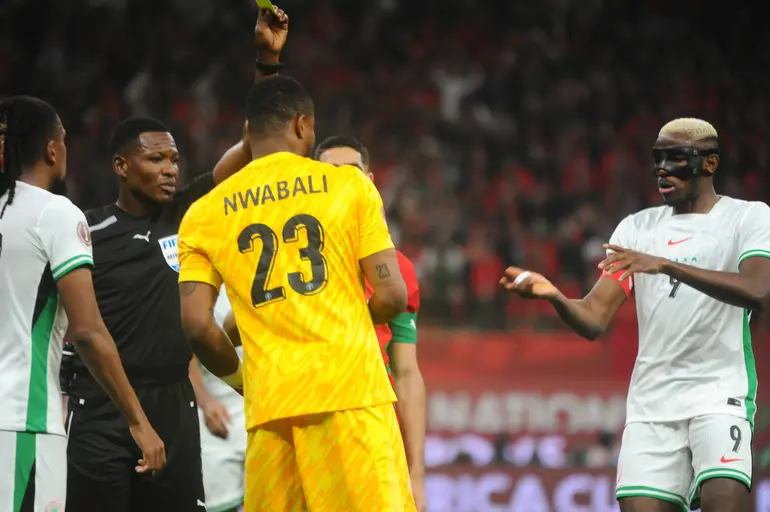


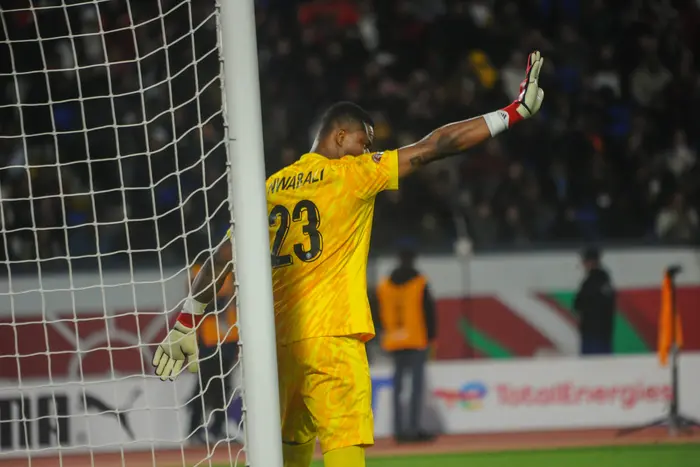
Football often celebrates the saves, clean sheets and heroic moments that fans see on the pitch. What supporters rarely witness are the personal battles players fight away from the spotlight. For Super Eagles goalkeeper Stanley Nwabali, the past year has been one of the most difficult periods of his life.
The Chippa United goalkeeper has finally explained why he stepped away from football, revealing that the emotional pain of losing both parents within a short period forced him to prioritise his mental and emotional wellbeing.
we believe every football story deserves context beyond the statistics. Nwabali’s experience is a reminder that footballers are human first before they become professionals.
Speaking about the difficult period, Stanley Nwabali disclosed that taking time away from football was never about losing motivation or commitment to the game.
Instead, it became necessary for him to grieve properly after suffering the heartbreaking loss of both his father and mother within months.
The emotional weight of those losses made it impossible for him to continue as though everything was normal. Rather than force himself onto the pitch, the Nigerian goalkeeper chose to step back and focus on healing.
For many professional athletes, such decisions are never easy. Football demands consistency, while grief demands time. Nwabali admitted that he simply needed the opportunity to recover emotionally before returning to competition.
For a player who has become one of Nigeria’s most dependable goalkeepers, stepping away from the game was a difficult decision.
Nwabali had built significant momentum following his impressive performances for the Super Eagles, where his commanding displays helped establish him as Nigeria’s first-choice goalkeeper.
However, personal tragedy quickly overshadowed football.
His decision to temporarily leave the game reflected remarkable maturity. Rather than allowing emotional struggles to affect his performances, he chose to deal with them away from the public eye.

Sometimes, the bravest decision is knowing when to pause.
During his time away, Nwabali received encouragement from family members, close friends, teammates and supporters who understood the magnitude of what he was going through.
That support played an important role in helping him regain the emotional strength needed to return to professional football.
Mental wellbeing has become an increasingly important conversation in modern football, with more players openly discussing the challenges they face away from the pitch, Nwabali’s honesty adds another powerful voice to that conversation.
Having taken the time he needed to heal, the Super Eagles goalkeeper is now fully focused on rebuilding his momentum at club and international level.
Nigeria will depend heavily on his experience as preparations continue for the 2027 Africa Cup of Nations qualifiers and the long-term journey towards the 2030 FIFA World Cup.
With his confidence gradually returning, Nwabali remains one of the country’s most important players between the posts,his resilience off the pitch could prove just as valuable as his performances on it.
Stanley Nwabali’s journey serves as an important reminder that professional athletes experience the same emotions and hardships as everyone else.
Behind every clean sheet, every spectacular save and every victory is a person carrying responsibilities, emotions and personal challenges.
By choosing healing over pressure, Nwabali demonstrated courage that deserves as much recognition as any performance on the football field.
As he continues his career with renewed purpose, Nigerian football fans will undoubtedly be hoping that the difficult chapter is behind him and that brighter days lie ahead for one of the Super Eagles’ most reliable stars.
For Nwabali, returning to football is not simply about making saves again. It represents resilience, healing and the determination to move forward despite unimaginable personal loss.