
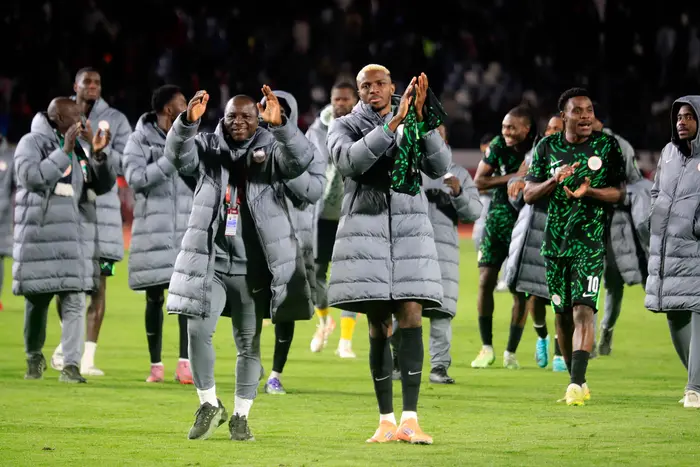


Nigeria’s absence from the 2026 FIFA World Cup remains one of the country’s biggest football disappointments in recent memory, but Senator Ned Nwoko believes the setback should mark the beginning of a stronger future rather than the end of a dream.
The Vice Chairman of the Nigerian Senate Committee on Sports has urged Nigerians to remain optimistic, insisting that the Super Eagles have what it takes to bounce back and qualify for the 2030 FIFA World Cup with better preparation, stronger planning, and greater commitment, we believe football’s greatest teams are often defined not by how they celebrate success, but by how they respond to disappointment.
Speaking after inspecting the newly completed NFF/FIFA 68-room hostel and football training pitches, Senator Nwoko acknowledged the pain of missing the 2026 World Cup but reminded Nigerians that qualification should never be taken for granted. According to him, every football nation must continually earn its place on the global stage through hard work and proper preparation.
“Not everyone will be at the World Cup at the same time. We have to work hard, hope and pray that we’ll be there next time,” Nwoko said.
His comments come at a time when Nigerian football continues to reflect on the disappointing qualification campaign that denied one of Africa’s traditional football giants a place at the expanded FIFA World Cup.
Rather than dwelling on failure, Nwoko believes the experience should become a valuable lesson for both the Nigeria Football Federation (NFF) and the players. He pointed to the impressive performances of several African nations at the ongoing tournament as evidence that success is built on consistency, preparation, and long-term planning.
“There is an element of luck in football. We have to work and prepare well. No country is small in football now.”
His remarks reflect the growing reality of modern football, where tactical discipline, organisation and effective player development often outweigh reputation. Nations once considered outsiders are now challenging traditional football powers, proving that sustained investment and proper planning can transform a country’s fortunes.

Nwoko specifically highlighted the performances of countries such as Morocco, Cape Verde, and Paraguay, noting that their success demonstrates what can be achieved through commitment and strategic football development. While Nigeria possesses one of the richest talent pools on the continent, recent World Cup campaigns have shown that talent alone is no longer enough. The Super Eagles now face the challenge of combining individual quality with tactical discipline, modern coaching methods and stronger administrative planning if they hope to return among football’s elite.
“We are going to get there next time and make a statement. But we have to be intentional,” the senator added.
Those words underline an important message qualifying for the 2030 FIFA World Cup must begin with deliberate action today.
Beyond the national team’s ambitions, Senator Nwoko called on the Nigerian government to increase investment in sports development across the country. The founder of Nigeria’s first sports university believes football and other sporting disciplines remain powerful tools for youth empowerment, employment and national development. According to him, greater government commitment can create opportunities for young athletes while strengthening the country’s sporting infrastructure.
“We just have to pay more attention to sports. The Nigerian government, of which I am a part, has to show greater commitment to sports. Government must understand that sports is a lifeline for many Nigerian youths.”
His comments echo long-standing calls from stakeholders who believe improved facilities, grassroots programmes and sustainable funding are essential to Nigeria’s future success.
While the disappointment of missing the 2026 FIFA World Cup still lingers, attention is gradually shifting toward the future. Under head coach Eric Chelle, the Super Eagles will soon begin preparations for the 2027 Africa Cup of Nations qualifiers, with the long-term objective of rebuilding a squad capable of competing for major honours and securing qualification for the 2030 World Cup. The journey back to football’s biggest stage will not be easy, but it offers Nigeria an opportunity to reset, rebuild and restore its place among Africa’s football elite.
Missing the 2026 FIFA World Cup was a painful reminder that history and reputation alone no longer guarantee success. However, Senator Ned Nwoko’s message serves as an important reminder that setbacks can become the foundation for future achievements when lessons are properly learned. The Super Eagles possess the talent, the passion and the fan base to compete with the world’s best. What remains is turning those strengths into a long-term football project built on planning, discipline and sustained investment. If Nigerian football embraces that challenge, the road to the 2030 FIFA World Cup could become the beginning of a new era rather than simply another qualification campaign.