


As African nations continue to make headlines at the 2026 FIFA World Cup, respected British-Nigerian coach Chuks Akuneto believes the continent has every reason to be proud of its progress. However, he insists there is one crucial area preventing teams like the Super Eagles from consistently competing with football’s biggest powers. According to the Oldham Athletic U-18 assistant manager, Africa no longer lacks talent. Instead, the next challenge lies in tactical development, preparation, and long-term planning, Akuneto’s assessment reflects a growing conversation across African football: the talent has always been there, but transforming that talent into sustained success requires more than individual brilliance.
The 2026 FIFA World Cup has showcased one of Africa’s strongest collective performances on football’s biggest stage. Nine African nations successfully progressed beyond the group stage, underlining the remarkable progress the continent has made in recent years. Tunisia were the only African representatives unable to advance, while South Africa’s journey eventually ended in the Round of 32 against Canada.
For Akuneto, these achievements are proof that African football is moving in the right direction.
“I’m impressed with what the African teams are doing at the World Cup 2026,” he said.
“They have clearly shown they are worthy ambassadors of the continent and that they can go even further in the competition.”
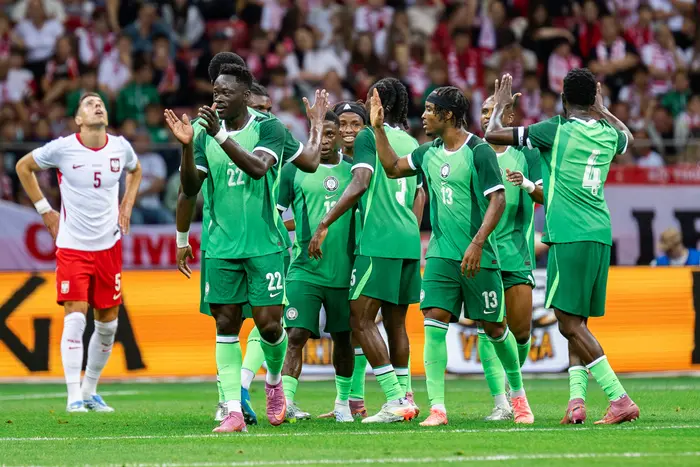
The performances have reinforced the belief that African teams are no longer simply participating at the World Cup they are arriving with genuine ambitions to challenge the world’s elite. Using Nigeria as an example, Akuneto argued that the country’s football history demonstrates just how close the Super Eagles have been to making deeper World Cup runs. He pointed to Nigeria’s memorable 1994 World Cup campaign, where the Super Eagles came within minutes of reaching the quarter-finals before eventually losing to Italy in extra time. He also referenced Morocco’s historic journey to the semi-finals at the 2022 FIFA World Cup as evidence that African nations can compete with traditional football giants.
“In 1994, Nigeria was two minutes away from reaching the quarter-finals, and in 2022, Morocco also came very close to the final,” Akuneto explained.
His message is clear: African football has produced enough quality players to compete with anyone. The remaining difference lies elsewhere. While praising Africa’s progress, Akuneto believes there is still work to be done. According to the UEFA A-licensed coach, nations like France and Spain continue to hold an advantage when it comes to tactical organisation and game management.
“Tactically, I think we are one or two steps behind the world leaders such as France and Spain,” he said.
Rather than criticising African football, Akuneto views this as the next stage in its evolution. Modern football is increasingly decided by structure, discipline, in-game adjustments and preparation. While athleticism and technical ability remain important, elite teams often separate themselves through superior tactical execution. That is an area where Akuneto believes African football can continue to improve.

One of Akuneto’s strongest observations centred on preparation. He argued that Nigeria’s struggles over the years have rarely been caused by a shortage of gifted footballers. Instead, he believes inconsistent planning and decision-making have often prevented the Super Eagles from maximising their enormous potential.
“We have never lacked talent. What we have lacked is decisiveness, proper planning and effective preparation for major tournaments.”
It is an opinion shared by many football stakeholders who believe long-term development structures are just as important as producing world-class players. Nigeria’s failure to qualify for the 2026 FIFA World Cup remains one of the country’s biggest football disappointments in recent years.
However, the performances of other African nations have also provided valuable lessons, with Eric Chelle now leading the Super Eagles into a new era, the focus has shifted towards building a more tactically disciplined squad capable of competing consistently at the highest level. The upcoming 2027 Africa Cup of Nations qualifiers offer Nigeria an opportunity to begin laying that foundation.
If the Super Eagles can combine their natural talent with improved tactical organisation and long-term planning, many believe they can once again become one of Africa’s leading football powers. Chuks Akuneto’s comments offer more than criticism they offer perspective.
African football is no longer chasing respect; it is earning it through results. The gap between Africa and the world’s traditional powerhouses continues to narrow with every major tournament.
The challenge now is turning potential into consistency, For Nigeria, the blueprint is becoming increasingly clear: maintain the country’s incredible production of talented players while investing more deeply in coaching, tactical education and long-term football planning, when those pieces come together, the Super Eagles may not be one or two steps behind for much longer, we remain committed to delivering insightful analysis, credible football news and the stories driving the future of Nigerian and African football.