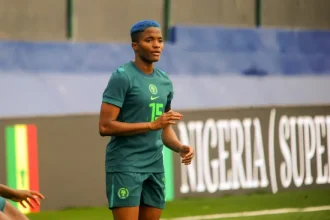

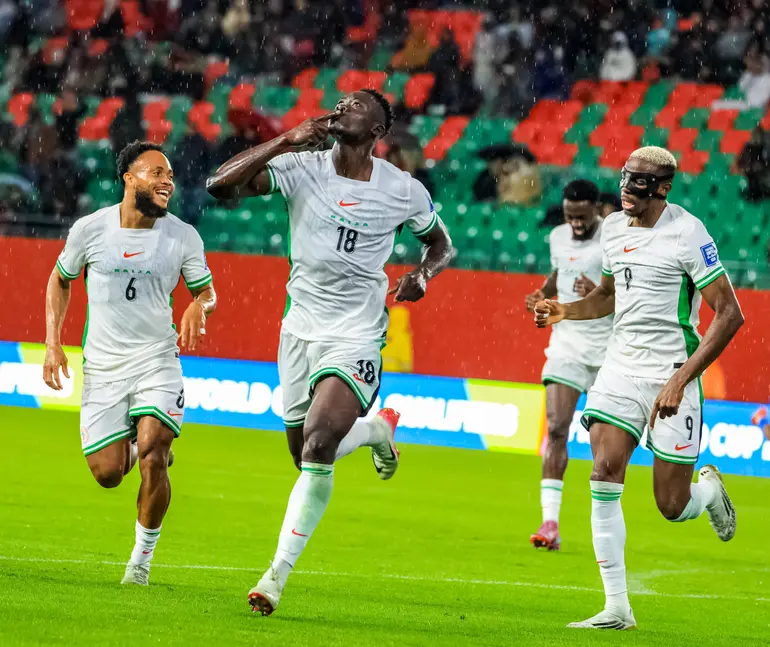
Nigeria’s absence from the 2026 FIFA World Cup remains one of the biggest disappointments in the country’s football history. While the world’s best nations compete on football’s grandest stage, millions of Nigerian supporters have been left wondering what could have been. For Sports Flames Communications, one question continues to dominate conversations among fans: can Victor Osimhen lead the Super Eagles back to the FIFA World Cup in 2030?
The answer is not as simple as yes or no. It is a story that goes beyond one striker, one coach or one generation. It is about leadership, planning, teamwork and a nation’s determination to reclaim its place among football’s elite.

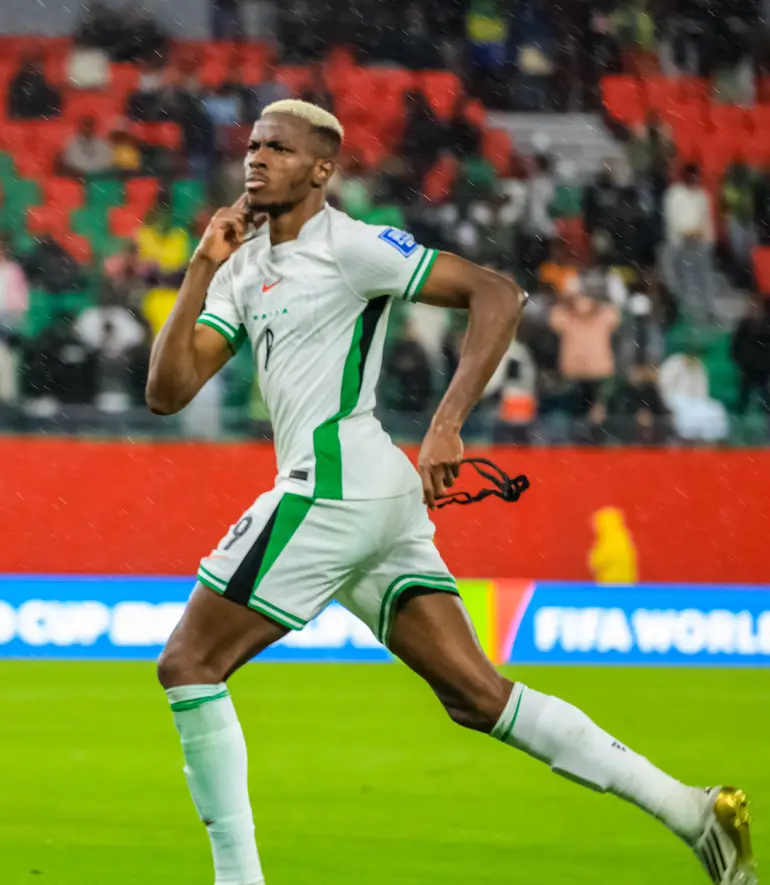
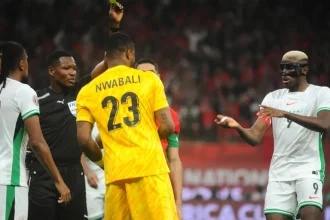
Few African footballers have reached the level Victor Osimhen currently occupies. From winning the FIFA U-17 World Cup Golden Boot to becoming one of Europe’s most feared strikers, the Galatasaray forward has consistently carried Nigeria’s attacking hopes. His pace, movement, aerial dominance and relentless pressing make him one of the complete forwards in world football.
Despite Nigeria missing the 2026 World Cup, Osimhen’s reputation has continued to grow across Europe. His performances for club and country have proven that individual brilliance is never in doubt.
Yet football has repeatedly shown that even the world’s greatest strikers cannot qualify a nation for the World Cup alone.
The Super Eagles possess one of Africa’s most talented squads. Alongside Osimhen are Ademola Lookman, Victor Boniface, Alex Iwobi, Wilfred Ndidi, Calvin Bassey, Samuel Chukwueze, Raphael Onyedika and several exciting young players developing across Europe.
The problem has never been a shortage of talent.
Nigeria’s failure to qualify for the 2026 FIFA World Cup exposed deeper issues including inconsistency, dropped points in crucial qualifiers, tactical instability and a lack of cohesion during key moments of the campaign. Former captain William Troost-Ekong has already described the failure as a major disappointment and called for meaningful changes moving forward, This should be viewed as a lesson rather than a permanent setback.
Head coach Eric Chelle now carries one of the biggest responsibilities in Nigerian football.
His immediate task is to build a younger, more balanced and tactically disciplined Super Eagles capable of competing consistently over the next four years. The qualification campaign for the 2030 FIFA World Cup cannot afford the mistakes that cost Nigeria a place in 2026.
Building a successful national team requires continuity, clear tactical identity and healthy competition across every position.
If Chelle succeeds in creating that environment, Osimhen will become even more dangerous because the burden will no longer rest solely on his shoulders.
Leadership is measured by much more than goals.
By 2030, Osimhen will be entering the later stages of his peak years, carrying invaluable experience from European football and multiple AFCON campaigns. His influence inside the dressing room could become just as important as his finishing ability.
The world’s best national teams rely on experienced leaders who inspire younger players through professionalism, commitment and resilience.
Nigeria will need exactly that.
The next generation of Super Eagles stars will look to Osimhen for guidance, particularly during difficult qualifying matches where mentality often separates winners from losers.
Although missing the 2026 World Cup hurts, Nigeria still possesses one of Africa’s strongest talent pools.
Young players continue to emerge from academies across the country and Europe, while established internationals remain in top leagues across England, Spain, Italy, Belgium, France and Turkey.
With proper planning, stable coaching, improved grassroots development and better administration, the Super Eagles have every opportunity to return among football’s biggest nations.
History has shown that setbacks often become the foundation for future success.
Can Victor Osimhen lead Nigeria to the 2030 FIFA World Cup?
Yes, but not alone.
Nigeria’s journey back to the World Cup will depend on collective responsibility, strong leadership, tactical discipline and long-term planning. Osimhen can provide the goals, the passion and the inspiration, but the Super Eagles must function as one united team if they hope to compete with the world’s best once again.
The road to 2030 starts now. Every qualifier, every international window and every decision made by the Nigeria Football Federation will shape whether the Super Eagles return to the biggest stage in world football.
One thing remains certain: if Nigeria gets it right, Victor Osimhen will be at the heart of the mission.