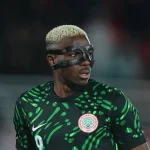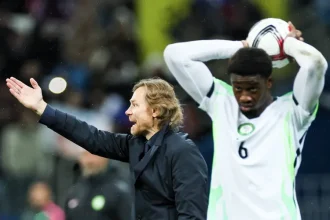

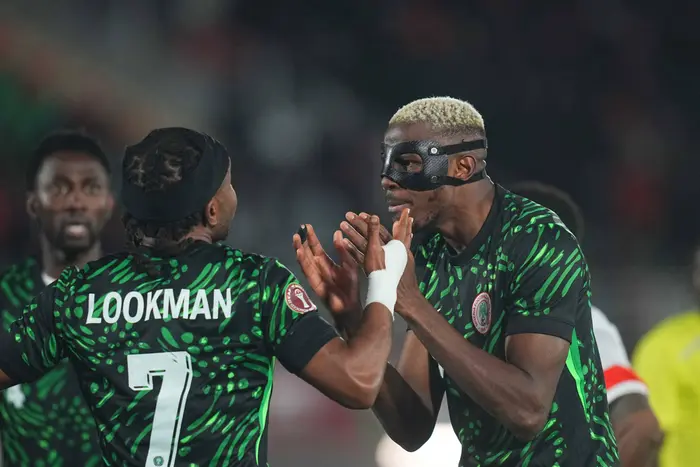


The 2026 FIFA World Cup is delivering drama, upsets and unforgettable moments, but for former Super Eagles coach Gernot Rohr, one disappointment continues to linger: Nigeria’s absence from football’s biggest stage, the Benin Republic head coach has admitted that seeing the tournament unfold without the Super Eagles is painful, especially knowing that some of Africa’s finest talents are watching from home.
For Rohr, the absence of players like Victor Osimhen, Ademola Lookman and Samuel Chukwueze is a major loss, not just for Nigeria but for the tournament itself.
Rohr, who led Nigeria to the 2018 FIFA World Cup in Russia and oversaw the early stages of the country’s qualification campaign for Qatar 2022, believes the Super Eagles had more than enough quality to secure a place at the 2026 tournament, however, he feels the team paid the price for failing to function as a cohesive unit during key moments of the qualifiers.
“I also think about how Nigeria hasn’t participated since 2018,” Rohr said.
“Even though they had great individual players with immense quality, they didn’t play like a team early on and dropped too many points.” Those words will strike a chord with many Nigerian football fans. Throughout the qualification campaign, the Super Eagles often looked like a collection of outstanding individuals rather than a settled, balanced side. The inconsistency eventually proved costly.
A Tournament Missing Some of Africa’s Biggest Stars
Few players have lit up world football in recent years like Victor Osimhen and Ademola Lookman. Osimhen has developed into one of Europe’s most feared strikers, combining pace, power and ruthless finishing. Lookman, meanwhile, has established himself among the continent’s elite attackers with his intelligent movement and eye for goal.
Samuel Chukwueze’s direct style and flair would also have added excitement to the competition, for Rohr, their absence represents a missed opportunity.

“It is truly a pity that major players like Osimhen, Chukwueze and Lookman are not here to be seen. For me, it’s a pity,” he said. It’s difficult to argue with that assessment. The World Cup thrives on personalities, stars and unforgettable performances. Nigeria’s attacking talents would undoubtedly have brought another layer of excitement to the tournament.
Rohr’s comments also serve as a reminder that football’s biggest tournaments are not won by talent alone. Nigeria’s squad is filled with players competing in some of Europe’s top leagues. Yet qualification slipped away because the team struggled to build momentum and dropped valuable points in games they were expected to win, the former Super Eagles coach believes chemistry and collective identity are just as important as individual brilliance.
The painful reality is that missing consecutive World Cups in 2022 and 2026 has raised difficult questions about the direction of Nigerian football. It has also increased the urgency around preparations for the 2030 FIFA World Cup, despite his disappointment over Nigeria’s absence, Rohr remains optimistic about the continent’s chances at the ongoing tournament, the experienced coach believes African teams have reached another level in tactical organisation, physical conditioning and overall discipline.
“From what I saw physically, in the two games featuring Morocco against Brazil and France against Senegal, as well as Ivory Coast against Ecuador, I think the African teams are doing well at the moment,” he said.
African football has evolved significantly over the past decade. Teams are no longer content with merely participating on the world stage. They now arrive with belief, structure and genuine ambitions of making history. Morocco’s remarkable run to the semi-finals in Qatar 2022 changed perceptions globally, and the performances of African nations in the 2026 tournament suggest that momentum has not disappeared.
There is no denying the sense of loss surrounding Nigeria’s absence from the FIFA World Cup. A tournament featuring Victor Osimhen’s fire, Ademola Lookman’s creativity and Samuel Chukwueze’s unpredictability would undoubtedly be richer for it, but Gernot Rohr’s remarks also offer an important lesson, talent opens the door, but teamwork keeps it open.
For the Super Eagles, the mission is now clear. The disappointment of missing back-to-back World Cups must become the fuel for rebuilding. The road to 2030 has already begun, and Nigeria cannot afford another missed opportunity.
As the football world enjoys the spectacle of the 2026 FIFA World Cup, one thought remains impossible to ignore: this stage feels incomplete without the Super Eagles, and perhaps that absence is exactly the wake-up call Nigerian football needs.