
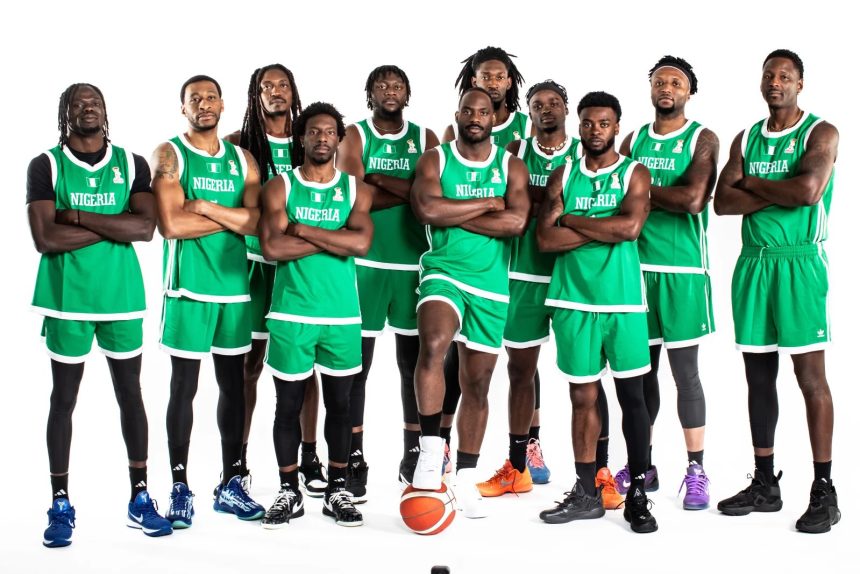
Nigeria’s D’Tigers face a dangerously narrow path to the 2027 FIBA Basketball World Cup after a chaotic opening qualification window in Tunis, where they suffered two demoralizing losses before scraping a tense overtime win in their final outing.
With just one win from three games, the former African champions sit third in Group C, still alive but with virtually zero margin for error in the remaining rounds.

The November 27–30 window exposed major flaws in the team’s structure and preparation, revealing glaring gaps in defensive execution, tactical identity, and mental resilience. Yet amid the turbulence, one standout performer prevented the campaign from spiraling into a disastrous winless start.
Slow Start, Costly Setbacks: Tunisia and Guinea Punish Nigeria
Game 1: Tunisia 88–78 Nigeria (OT)
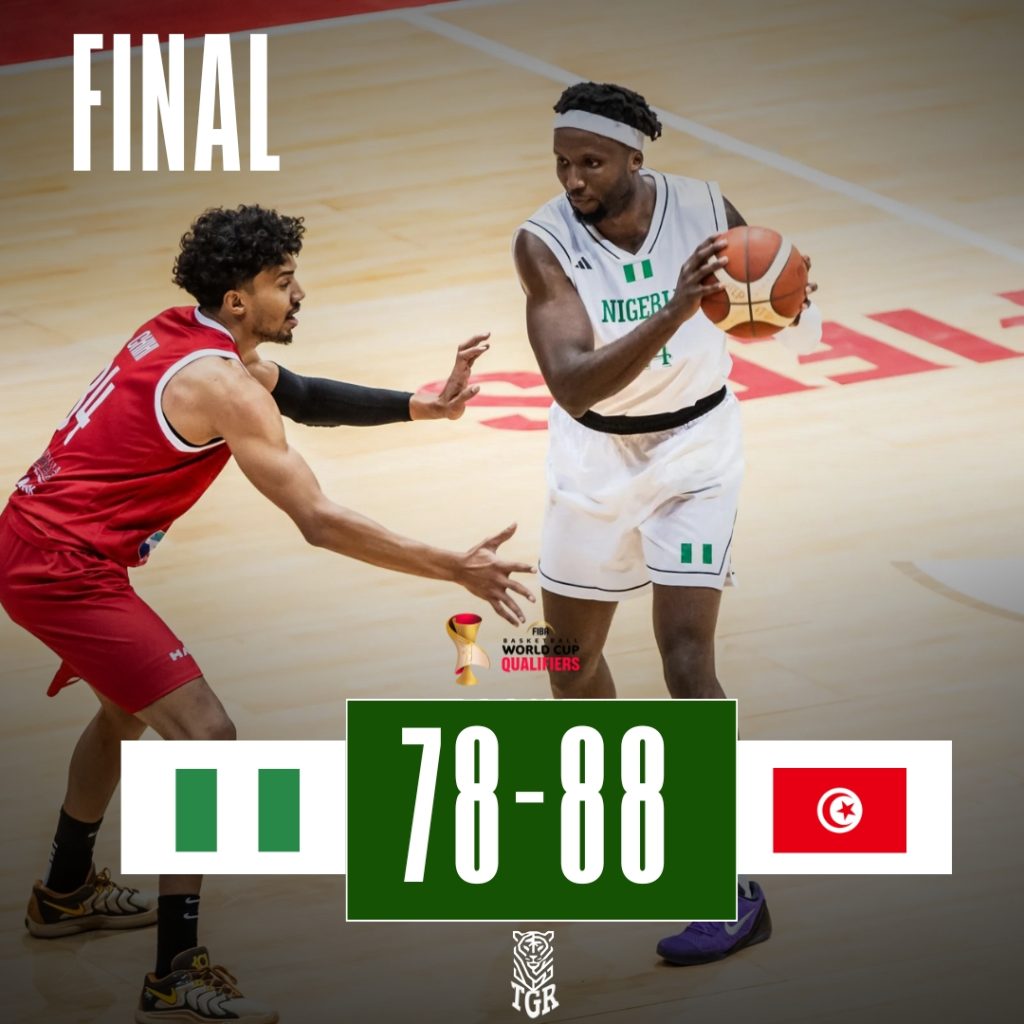
Nigeria opened their qualifying journey with a frustrating 88–78 overtime defeat to hosts Tunisia after a disrupted travel arrangement that left the squad with barely one training session.
Head coach Abdulrahman Mohammed rolled out a starting lineup of Jordan Ogundiran, Ike Nwamu, Stan Okoye, Talib Zanna, and Chris Obekpa.
A sharp early burst saw Nigeria lead 5–0 and take the first quarter 15–12, but their rhythm collapsed in the second period as Tunisia flipped the momentum to lead 35–32 at halftime.
Stan Okoye’s clutch three-pointer forced overtime at 73–73, but Tunisia dominated the extra period behind Omar Abada’s 29-point masterclass.
Talib Zanna shone for Nigeria with 22 points and eight rebounds, but the late collapse set a worrying tone.
Game 2: Guinea 69–55 Nigeria — A Historic Low
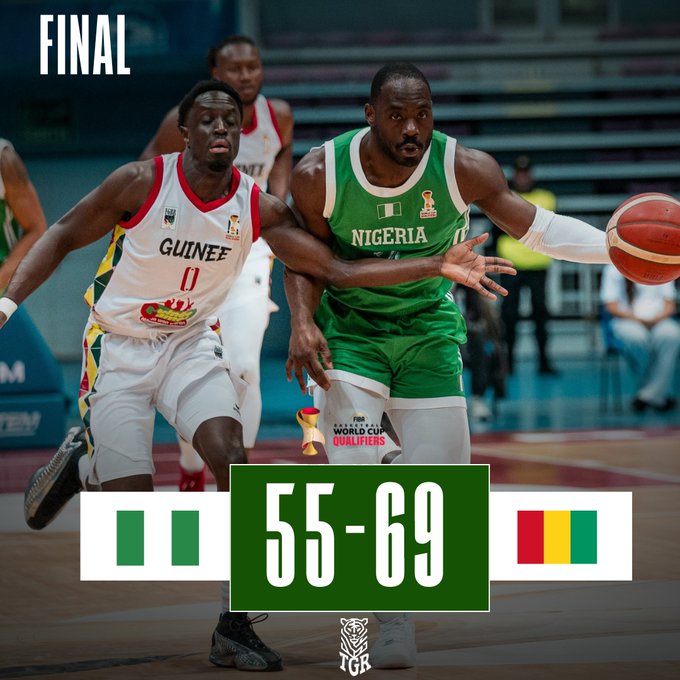
Two days later came a stunning blow: a 69–55 defeat to Guinea, Nigeria’s first-ever loss to the West African nation in international basketball, ending a dominance that stretched nearly four decades.
Guinea controlled proceedings from the opening tip, leading 22–16 after the first quarter and 35–26 at halftime. Nigeria struggled to generate offense, shooting just 27% from the field, and repeatedly failed to cope with Guinea’s aggressive defensive schemes.
Guinea’s coach, Nedeljko Ascerić, credited the upset to defensive discipline:
“The X-factor was our defence. We held them to 27 percent shooting.”
Guinea’s duo Souleyman Boum Jr. and Shannon Evans combined for 40 points, dismantling the Nigerian defence and pushing D’Tigers into early crisis mode.
Game 3: Nigeria 75–69 Rwanda (OT) — Udeze Saves the Campaign
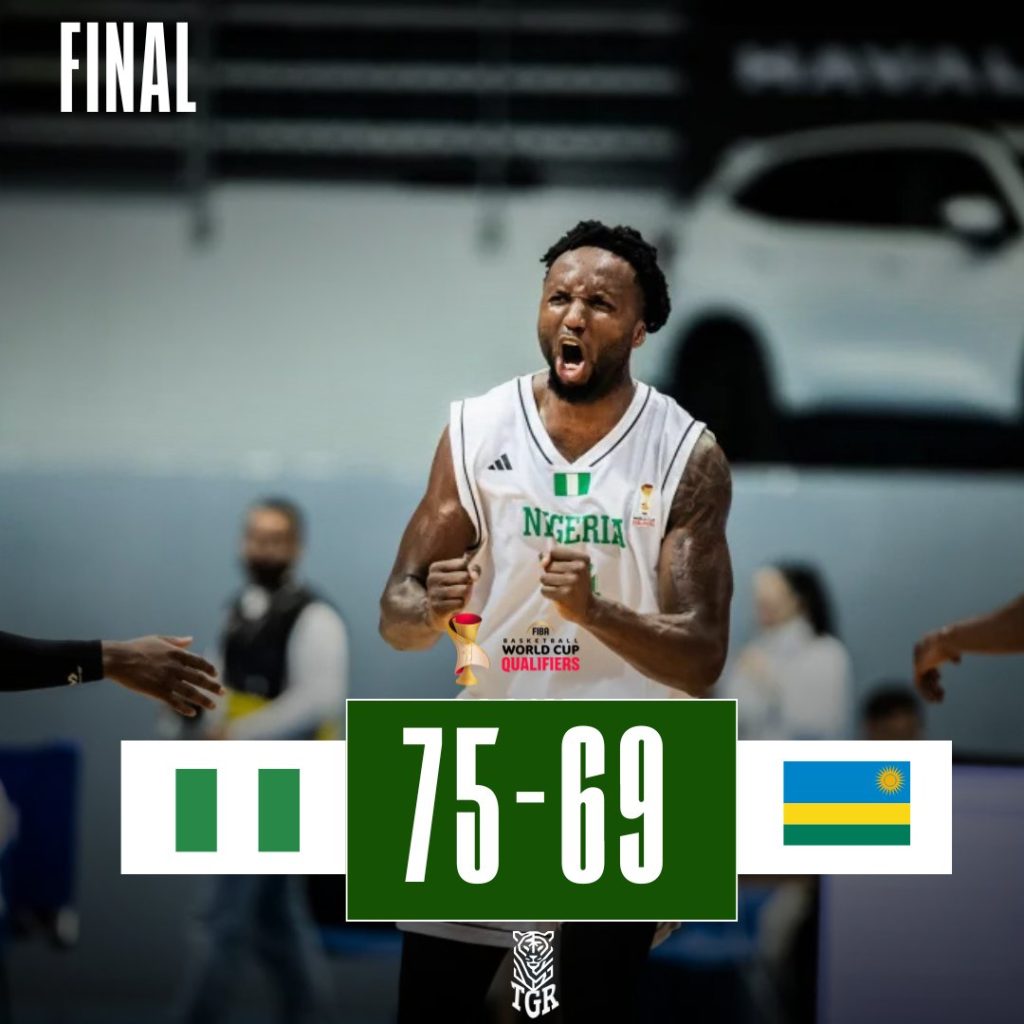
Facing the prospect of a winless window, Nigeria dug deep to escape with a 75–69 overtime victory over Rwanda, carried almost single-handedly by Morris Udeze, whose performance was one of the standout displays of the entire qualification round.
Udeze dropped 30 points, the highest by any player in the first window, and consistently produced baskets when Nigeria needed him most.
Coach Abdulrahman Mohammed didn’t hide his admiration:
“If he (Udeze) wasn’t here, I don’t know where we would have been.”
“He embraced his role.”
“Every time he is on the floor, he gives everything he’s got.”
“I would like to give him credit for today’s win.”
The win spared Nigeria a bottom-place finish and kept their World Cup hopes intact.
Squad Composition: A Blend Seeking Chemistry
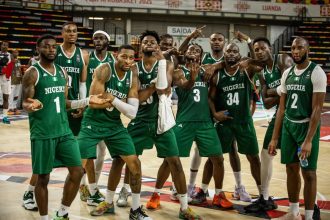
Nigeria’s 12-man roster mixed overseas professionals with three home-based players, headlined by former AfroBasket captain Ike Nwamu, alongside veterans Stan Okoye and Chris Obekpa. New faces such as Mike Nuga, Olisa Akonobi, and Chingka Garba earned their first taste of competitive action.
Full squad:
Olisa Akonobi
Paul Dibal
Chingka Garba
Morris Udeze
Mike Nuga
Ike Nwamu
Chris Obekpa
Jordan Ogundiran
Augustine Okafor
Stan Okoye
Ugo Simon
Talib Zanna
Despite the federation’s pre-window claim that the team was “locked and loaded,” the performances suggested a roster still struggling for cohesion, structure, and consistent execution.
What Comes Next: The Road to Qatar 2027
Window Two takes place in July 2026, with the same Group C opponents, Tunisia, Guinea, and Rwanda, completing the first round.
Qualification Format
- The top 3 teams from each group advance.
- Results carry over into the next round.
- The 12 qualifiers are split into two groups of six.
- Each team plays six more games.
- Only five African teams reach the World Cup:
- Top 2 in each group
- Best third-placed team
Nigeria currently ranks 8th in FIBA Africa, far from the heights reached under former coaches Will Voigt and Alex Nwora, and the federation has emphasized that these qualifiers are crucial to reclaiming past glory, especially after the early exit in 2019 and failure to qualify in 2023.
A Narrow Path, but Hope Still Alive
Despite a volatile, inconsistent window, D’Tigers’ destiny remains in their hands. Their chances of advancing depend on:
- Sharper execution
- Better tactical preparation
- Stronger roster consistency
- Immediate defensive improvement
With three games left in the first phase, Nigeria must win at least two to stay on track and avoid missing the World Cup for a second straight cycle.
They are alive but only just.