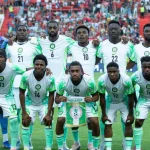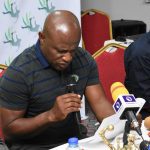

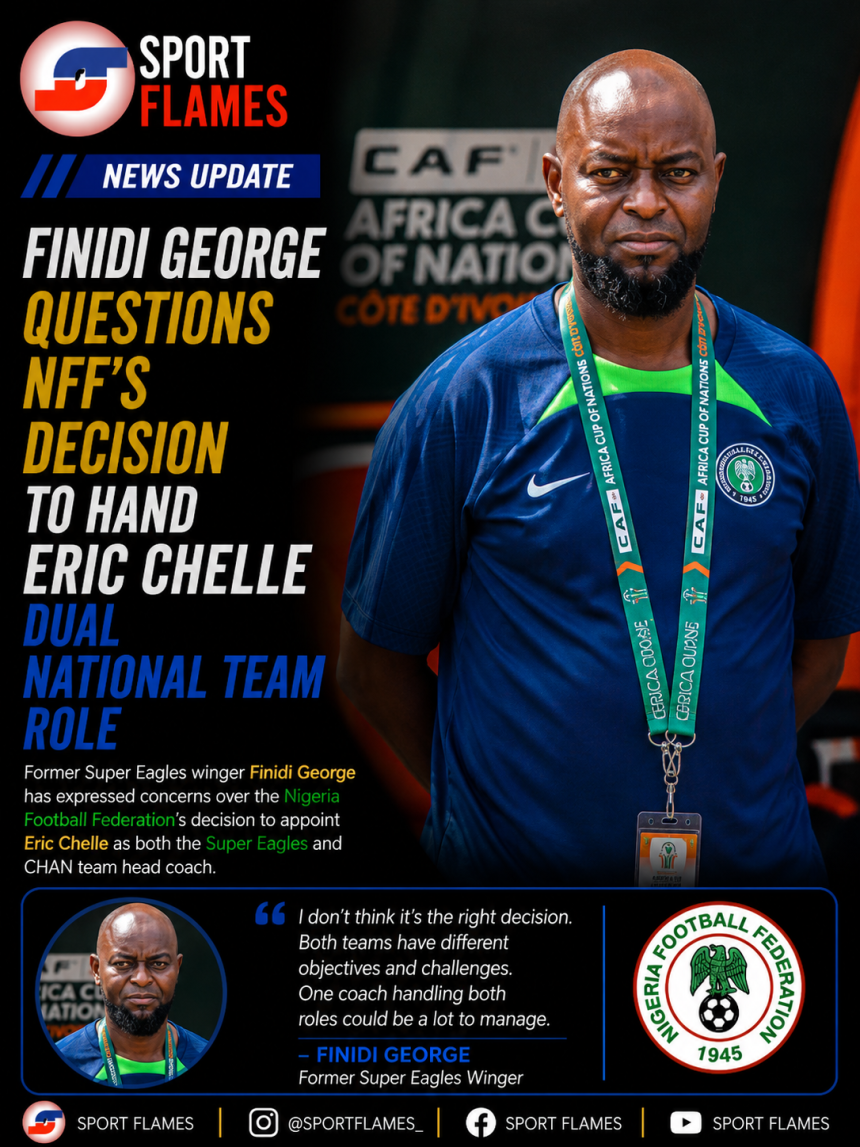


Former Super Eagles head coach Finidi George has publicly expressed concerns over the decision to place both the Super Eagles and Nigeria’s U-23 Olympic team under the leadership of current national team coach Eric Chelle.
The Nigeria Football Federation’s recent move to extend Chelle’s responsibilities has generated significant debate within Nigerian football circles. While officials believe the arrangement will create a smoother pathway from youth football to the senior national team, Finidi believes the workload may prove excessive.
Finidi’s Concerns
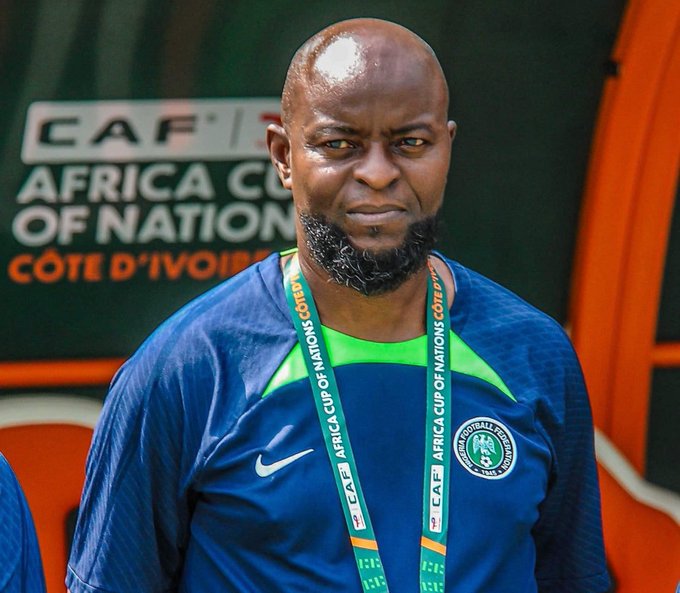
According to comments circulating on social media, Finidi argued that managing two national teams simultaneously could dilute Chelle’s focus and effectiveness.
His primary concern centers on the U-23 side, commonly known as the Olympic Eagles, which is preparing for qualification campaigns ahead of the 2028 Olympic Games in Los Angeles.
Finidi believes the team deserves a dedicated coach focused solely on youth development and Olympic qualification rather than sharing leadership with the senior national team setup.
Why the NFF Supports the Move
The NFF and the National Sports Commission have defended the decision as part of a broader long-term strategy.
Under the arrangement, Chelle will oversee both squads, allowing him to:
- Monitor emerging talents more closely
- Create a clearer pathway from U-23 level to the Super Eagles
- Implement a consistent football philosophy across both teams
- Prepare players for future tournaments, including AFCON and the World Cup
Officials have repeatedly stated that the objective is not to overburden Chelle but to ensure continuity in player development.
Historical Precedent
Supporters of the decision have pointed to the example of Bonfrere Jo, who successfully handled both the senior team and Olympic side during parts of his tenure.
That era culminated in one of the greatest achievements in Nigerian football history, with the Dream Team winning Olympic gold at the 1996 Summer Olympics Football Tournament in Atlanta.

Many fans therefore see the dual-role structure as a proven model rather than an experiment.
Chelle’s Growing Influence
Since taking charge in January 2025, Chelle has largely won over supporters through improved performances and a more coherent playing style.
The Super Eagles have shown signs of stability under his leadership, and recent results have strengthened confidence in his long-term project.
The reported extension of his contract until 2030, alongside improved financial terms and greater support for his technical staff, demonstrates the federation’s faith in his vision.
A Debate Worth Having
Finidi’s comments have reopened an important discussion about how Nigeria should structure its national teams.
There are valid arguments on both sides:
Benefits of the dual role
- Better player transition from youth to senior football
- Unified tactical philosophy
- Greater oversight of emerging talent
Potential drawbacks
- Increased workload and burnout risk
- Less specialized attention for the U-23 squad
- Possibility of conflicting schedules and priorities
Ultimately, the success or failure of the arrangement will be judged by results. If Nigeria qualifies for major tournaments and develops a strong pipeline of young talent, the NFF’s decision will be viewed as visionary. If performances suffer, Finidi’s warning may look increasingly prescient.
For now, Eric Chelle remains at the center of Nigeria’s football future, tasked with guiding both the present and the next generation of Super Eagles stars.