
The 2026 FIFA World Cup is not only bringing together the world’s biggest football stars it is also shaping up to be one of the most fascinating managerial battles in tournament history.
For years, international football struggled to attract elite coaches away from the money, prestige, and daily intensity of club football. But this World Cup feels different. National teams are now turning to some of the biggest tactical minds in modern football to chase global glory.
From Carlo Ancelotti leading Brazil to Thomas Tuchel attempting to end England’s decades of pain, the sidelines could be just as important as the action on the pitc. We take a closer look at the managers who could define the 2026 World Cup.
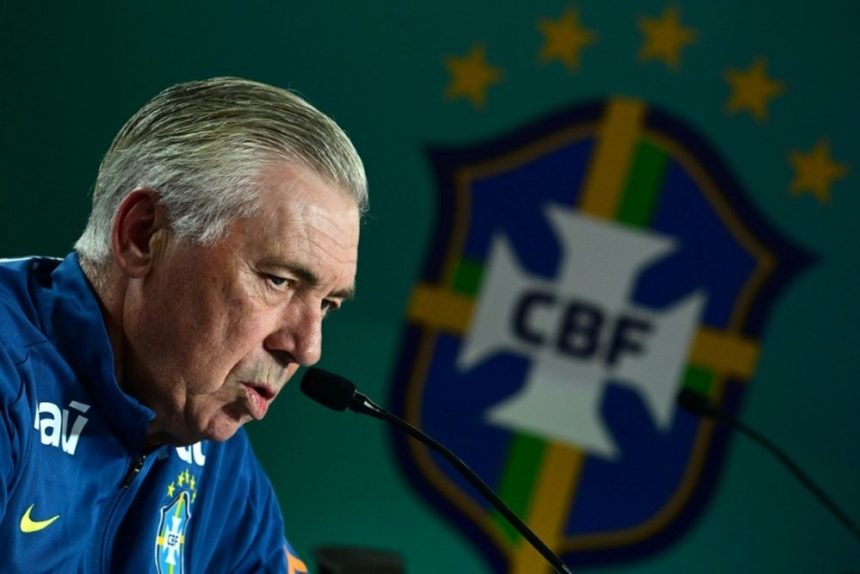
No appointment has generated more excitement than Carlo Ancelotti taking charge of Brazil national football team. Brazil have not lifted the World Cup since 2002, and after repeated disappointments against European opposition, the Selecao turned to one of football’s greatest-ever coaches.
Ancelotti’s record speaks for itself. With five UEFA Champions League titles, he has mastered knockout football better than almost anyone in history.
More importantly, he already understands many of Brazil’s biggest stars. Players like Vinicius Junior flourished under him at Real Madrid, and Brazil will need that connection if they are to become world champions again.
The Italian manager’s calm personality could also prove vital for a national team that has often struggled emotionally under pressure during recent tournaments.
For England national football team, the mission remains painfully familiar finally winning a major international trophy.
Since the 1966 World Cup, England have repeatedly fallen short despite possessing talented squads. Former manager Gareth Southgate came close, guiding the team to two European Championship finals and a World Cup semi-final, but the trophy never arrived.
Now, the Football Association has handed responsibility to Thomas Tuchel.
The former Chelsea and Paris Saint-Germain boss brings tactical experience, intensity, and a Champions League-winning pedigree.
However, international football presents unique challenges. Managers have limited time with players, less tactical preparation, and must handle enormous pressure during short tournaments.
Tuchel’s ability to adapt quickly could determine whether England finally break their 60-year drought.
Hosting the World Cup always creates pressure, and Mauricio Pochettino is already feeling it with United States men’s national soccer team.
Results under the Argentine manager have been inconsistent. While there have been encouraging wins against strong opponents, disappointing defeats to teams like Panama, Mexico, and Canada have raised concerns among supporters.
The challenge for Pochettino is enormous. The United States are expected to perform strongly on home soil, but expectations can quickly become burdens.
With young talent throughout the squad and massive home support behind them, the Americans have potential. But consistency remains their biggest obstacle. Few managers in world football are as respected by fellow coaches as Marcelo Bielsa.
From Pep Guardiola to Pochettino himself, many of football’s top tactical minds credit Bielsa as one of their greatest influences.
Now leading Uruguay national football team, Bielsa could be entering his final World Cup with one last chance to leave a global mark.
Uruguay impressed early under his leadership, recording major victories over Brazil and Argentina during qualification. But concerns have also emerged about Bielsa’s famously intense methods.
Former striker Luis Suarez publicly criticised the manager’s approach after retiring from international football, highlighting the emotional demands Bielsa places on players.
Still, when Bielsa’s football works, it remains some of the most exciting and fearless in the world.
At just 38 years old, Julian Nagelsmann carries the responsibility of restoring Germany national football team to football’s elite.
Germany endured a disastrous run between 2018 and 2024, including back-to-back World Cup group-stage exits that shocked world football.
Nagelsmann helped restore pride during the European Championship on home soil, but now comes the ultimate test the World Cup itself.
The challenge is complicated by concerns over key attacking players such as Jamal Musiala, Florian Wirtz, and Kai Havertz, all of whom have battled fitness or inconsistency at club level.
Still, Nagelsmann remains one of football’s sharpest tactical thinkers, and Germany’s tournament pedigree can never be ignored. Modern football is no longer won by talent alone.
The margins between top nations are now incredibly small. Tactical preparation, squad management, substitutions, and handling pressure can determine whether teams lift the trophy or leave disappointed.
That is why so many countries are now investing in elite coaches with proven experience at the highest level. The 2026 FIFA World Cup may ultimately be remembered not only for the brilliance of players like Kylian Mbappe, Vinicius Junior, or Jude Bellingham but for the tactical battles unfolding on the touchline.
One thing is clear: this World Cup will feature one of the strongest collections of managers international football has ever seen.
From Ancelotti’s calm leadership to Tuchel’s tactical intensity, Bielsa’s fearless philosophy, Pochettino’s rebuilding project, and Nagelsmann’s youthful innovation, the battle for the trophy will be fought far beyond the pitch.
And in a tournament where one decision can change history, the world’s best coaches may become the difference between heartbreak and immortality.