
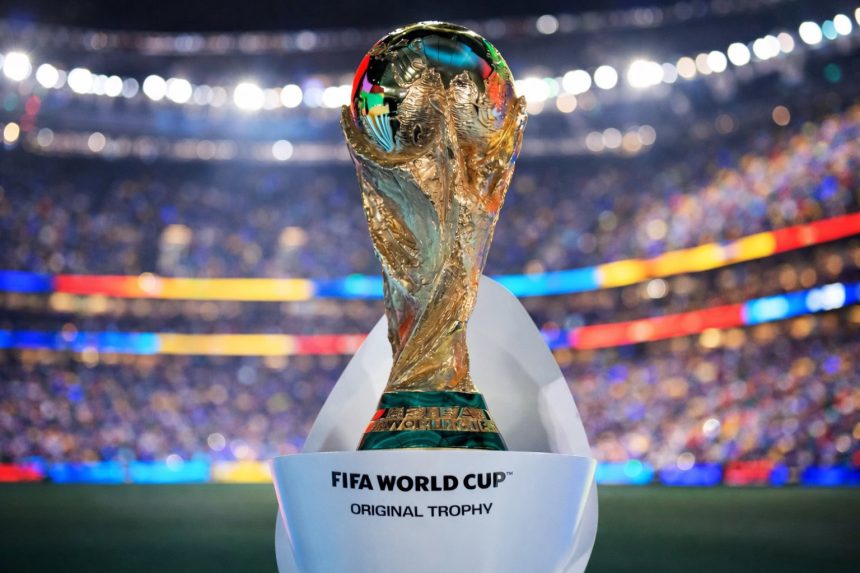


Iran’s participation in the 2026 FIFA World Cup has been thrown into doubt following escalating military conflict involving the United States and Israel, creating uncertainty within global football governance and prompting speculation in Nigeria about potential downstream effects.
The crisis intensified after reported joint US–Israeli strikes on Iran that allegedly resulted in the death of Supreme Leader Ayatollah Ali Khamenei. In the aftermath, Iran Football Federation president Mehdi Taj delivered a stark warning to state outlet Varzesh3:
“With what happened today and with that attack by the United States, it is unlikely that we can look forward to the World Cup, but the sports chiefs are the ones who must decide on that.”
Logistical and Political Barriers
Iran had already secured qualification via the AFC pathway and was drawn in Group G alongside Belgium, New Zealand, and Egypt. Their fixtures were scheduled for Los Angeles and Seattle, both in the United States, one of the tournament’s co-hosts.
However, a combination of factors now threatens their participation:
- Previous visa denials for Iranian officials ahead of the World Cup draw
- Airspace closures
- National mourning
- Heightened security concerns
- Escalating geopolitical tensions
While no formal withdrawal has been submitted, signals from Iranian media and federation officials suggest a boycott or enforced absence is increasingly plausible.
FIFA Secretary General Mattias Grafström has stated that the governing body is “monitoring developments,” emphasizing its priority remains delivering “a safe World Cup with everybody participating.”
If Iran Withdraws, Who Replaces Them?
Under FIFA regulations, any vacated slot would be filled by a replacement from the Asian Football Confederation (AFC).
Early speculation centers on:
- Iraq (if advancing via the AFC playoff pathway)
- United Arab Emirates (narrowly missing direct qualification)
A substitution would require adjustments to Group G scheduling, venue allocations, travel logistics, and commercial planning.
Does This Create Hope for Nigeria?
For the Super Eagles, the situation has sparked cautious discussion in local media, though any pathway remains indirect.

Nigeria is currently awaiting a crucial FIFA ruling regarding their protest against DR Congo following a playoff defeat in November 2025. The Nigerian federation alleged that DR Congo fielded ineligible dual-nationality players.
If the appeal is upheld:
- Nigeria would replace DR Congo in the intercontinental playoff
- The Super Eagles would face the winner of New Caledonia vs Jamaica
- Their 2026 qualification hopes would be revived
Technically, an Iranian withdrawal would not create a slot for a CAF nation, as the berth would remain within the AFC. However, broader tournament disruption could trigger administrative reviews or procedural reconsiderations, particularly in an expanded 48-team format already managing complex qualification pathways.
While speculative, Nigerian outlets have framed the geopolitical uncertainty as a “glimmer of hope,” especially given the timing of Nigeria’s unresolved protest.
Immediate Impact on Nigeria’s Preparations
The ripple effects may extend beyond qualification mathematics.
Nigeria is scheduled to participate in a March four-nation invitational tournament in Jordan, where Iran was originally set to be their opening opponent. If Iran formally withdraws from international competition, the mini-tournament could be canceled or restructured, disrupting preparation plans for the Super Eagles.
A Fluid Situation
At present:
- FIFA has not announced any disciplinary or replacement process regarding Iran
- Iran has not officially withdrawn
- Nigeria’s protest case remains under review
The 2026 cycle has already produced administrative tension and competitive drama. Should Iran’s situation deteriorate further, it would add another layer of complexity to an already delicate qualification landscape.
For Nigerian supporters monitoring every development tied to their appeal, events unfolding in Tehran now carry unexpected relevance. Whether symbolic or substantive, uncertainty at the global level has reopened conversations that many believed were settled.
In international football governance, cascading effects are never impossible, and the coming days could prove pivotal both for Iran’s place on the world stage and Nigeria’s lingering qualification hopes.